🎵 Gold Star Pokemon Cards Guide Volume III
This guide equips collectors with the knowledge to identify counterfeit Gold Star Pokémon cards by breaking down the key visual differences and specific red flags between authentic English and Japanese print.
High Value, High Risk: The Modern Counterfeit Threat to Legendary Gold Stars
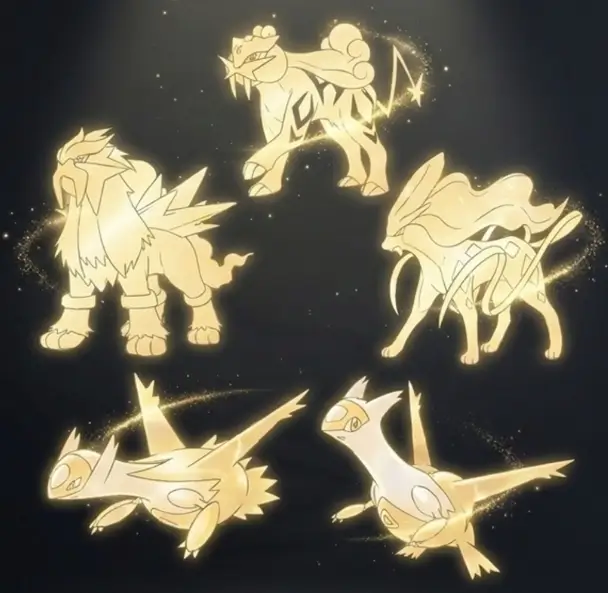
Following the critical insights shared in Volume II, we advance deeper into the most elite tiers of the hobby. In this third installment, we tackle a category of cards that defines the pinnacle of vintage collecting—and consequently, the absolute peak of counterfeit risk. We are entering the realm of the Legendary Beasts Trio and the Eon Duo, home to some of the most relentlessly chased grails in card history.
Because these iconic pieces command massive price tags, they remain prime targets for incredibly sophisticated scammers. If you are looking to invest in authentic legendary gold star Pokémon cards, relying on guesswork is a recipe for disaster. In Volume III of the Validoe Fake Flags guide, we break down the definitive micro-text discrepancies, the English versus Japanese market dynamics, and the exact physical indicators you must verify before making a high-stakes acquisition.

HIGH VALUE. HIGH RISK.
The EX era produced some of the most relentlessly chased cards in history.
Because the Legendary Beasts and the Eon Duo carry massive price tags, they remain prime targets for sophisticated counterfeiters.
Whether you hunt English or Japanese copies, you must know exactly what to look for before making a deal.
The Ultimate Debate: English vs. Japanese
Which Gold Stars should you pursue?
| Feature | English Prints | Japanese Prints |
| Print Quality | ★ Strong | ★ Superior (Strict QC) |
| Text & Holo Clarity | ★ Crisp | ★ Razor Sharp & Clean |
| Global Demand | ★ Massive (Highly Liquid) | ★ Strong (Niche Premium) |
| Counterfeit Risk | ⚠️ Extremely High | ⚠️ Moderate |
Japanese copies offer superior factory quality; English copies offer ultimate global market liquidity.
SOME FAKE GOLD STAR ★ CARDS IN THE MARKET
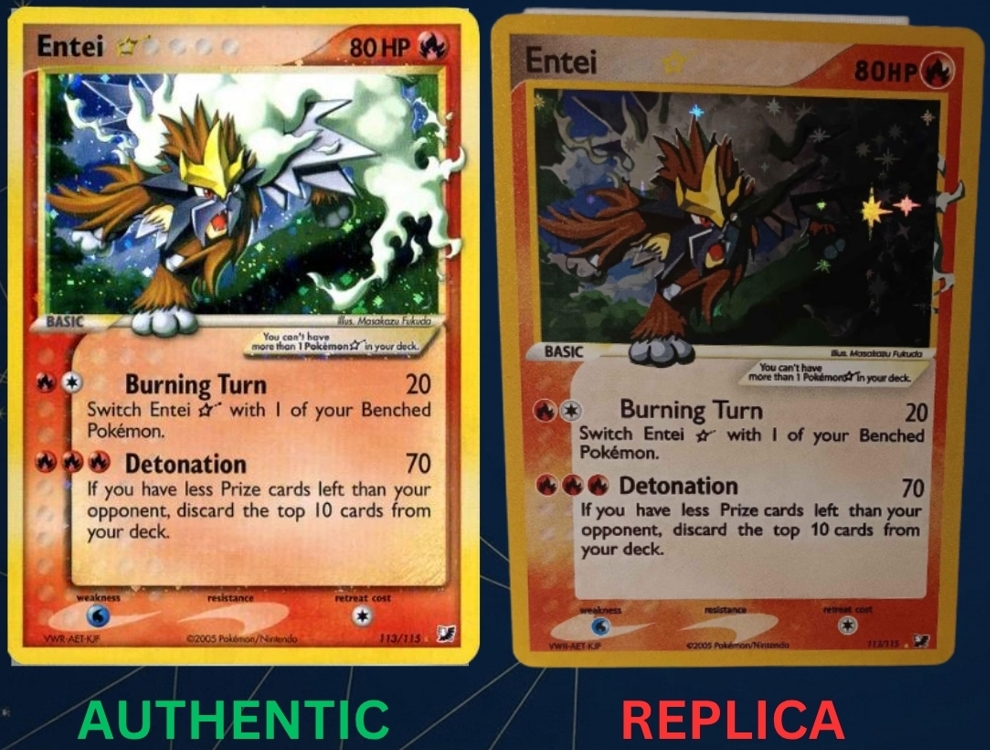
ENTEI ★ EN
The authentic English Entei features a clean, natural color balance, razor-sharp text, and a genuine cosmos “glitter” holo. In contrast, this replica suffers from a severe color imbalance, appearing unnaturally dark and muddy across both the artwork. The fake’s holographic effect is a major giveaway, featuring large, artificial starbursts that look printed directly onto the card rather than reflecting like genuine foil, and its noticeably blurry text points directly to a low-resolution scan.
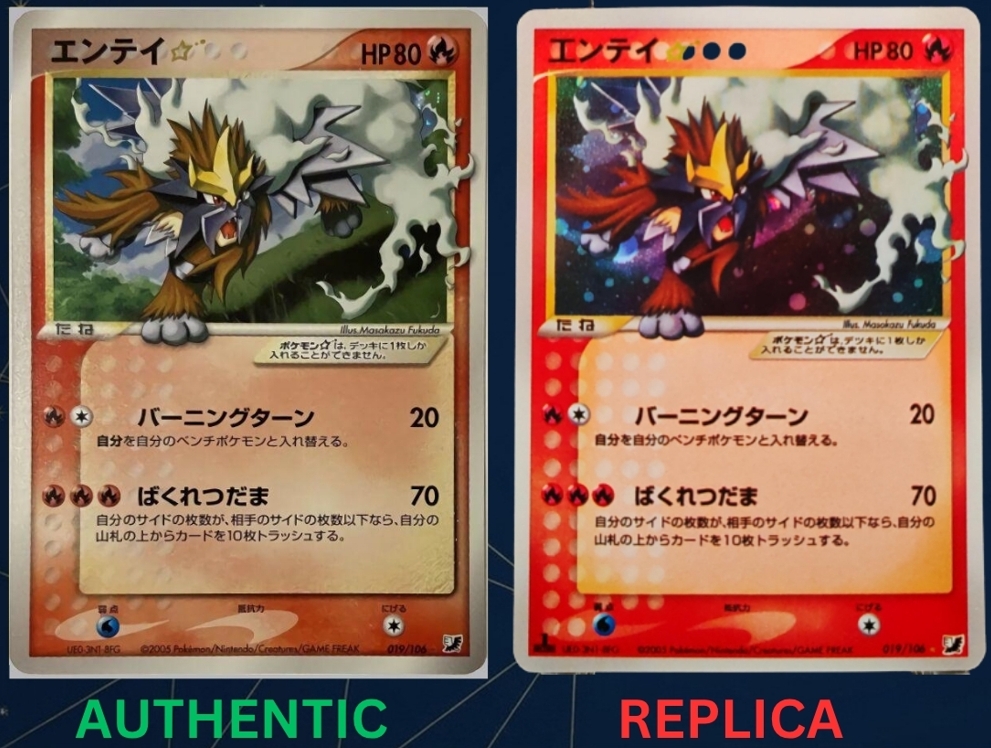
ENTEI ★ JP
The authentic Japanese Entei features a clean color balance, crisp text, and a genuine cosmos holo. In contrast, this replica suffers from an oversaturated red tint and a glaring error: three dark circles instead of the iconic gold star (★). Combined with an artificial, printed-on holo pattern and blurry text, this fake is clearly a low-resolution scan.
SUICUNE ★ EN
The authentic English Suicune features a clean color balance, crisp text, and a genuine cosmos holo. In contrast, this replica suffers from an unnaturally dark, muddy yellowish tint across the entire card. Combined with an artificial, printed-on holo pattern featuring oversized starbursts and noticeably blurry text, this fake is clearly a low-resolution scan.
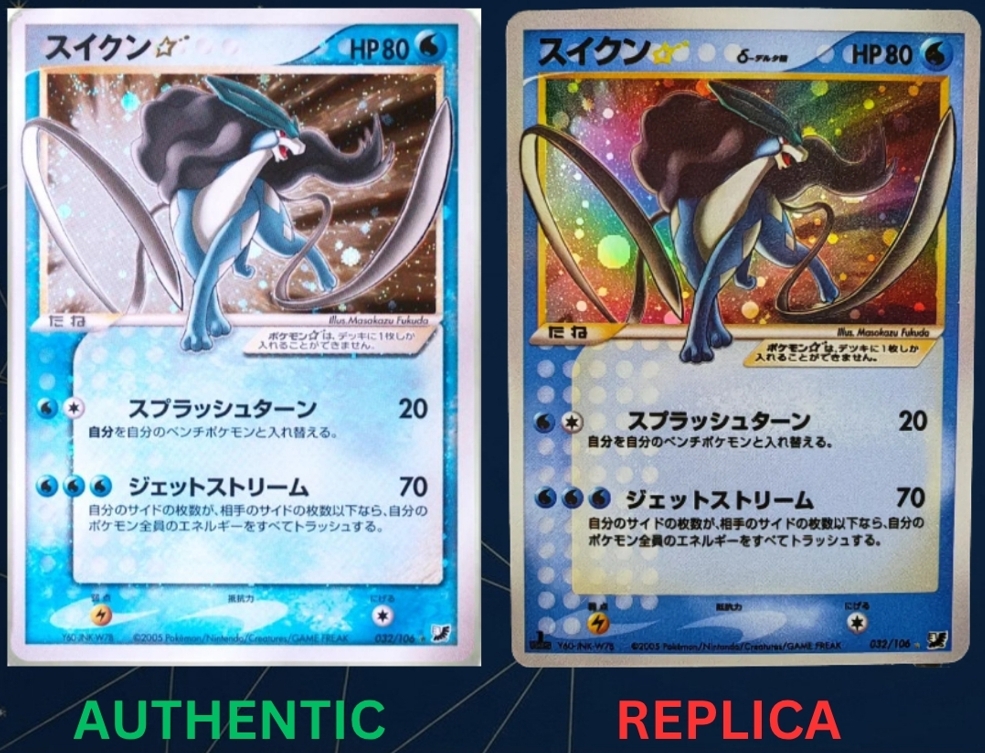
SUICUNE ★ JP
The authentic Japanese Suicune features a sleek silver border, clean color balance, crisp text, and a genuine cosmos holo. In contrast, this replica suffers from a muddy, dark tint that washes out the artwork. Combined with an artificial, printed-on holo pattern featuring oversized circular starbursts and noticeably blurry text, this fake is clearly a low-resolution scan.
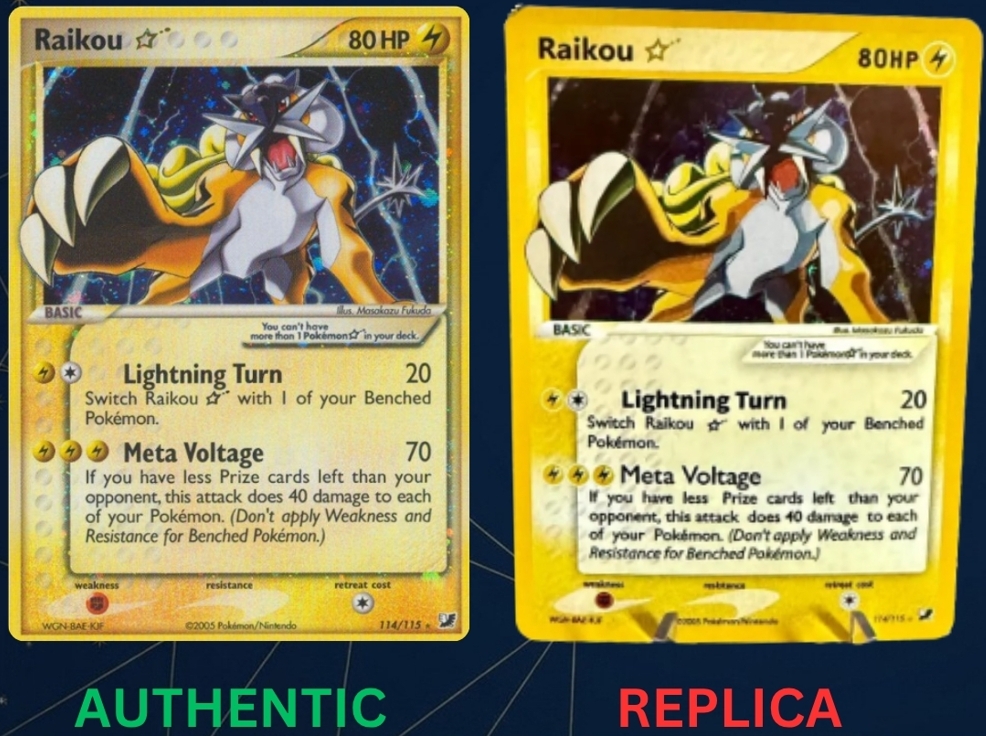
RAIKOU ★ EN
The authentic English Raikou features a clean color balance, crisp text, and a genuine cosmos holo. In contrast, this replica suffers from an unnaturally harsh, bright yellow border and overly dark, muddy artwork. Combined with an artificial, printed-on holo pattern featuring oversized starbursts and noticeably blurry text, this fake is clearly a low-resolution scan.
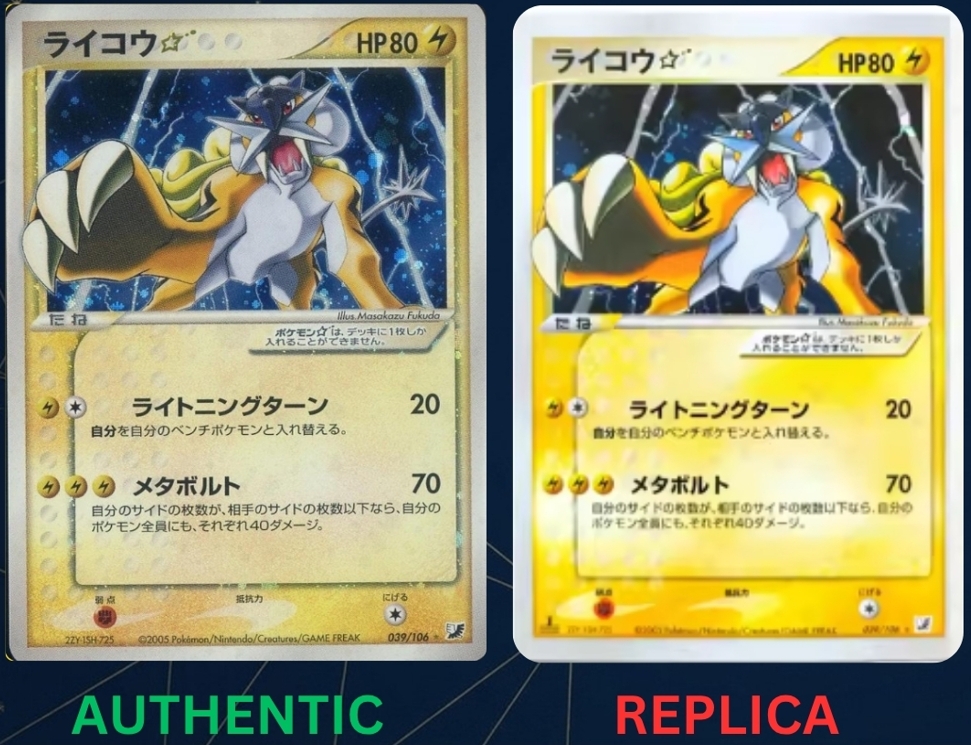
RAIKOU ★ JP
The authentic Japanese Raikou features a sleek silver border, clean color balance, crisp text, and a genuine cosmos holo. In contrast, this replica suffers from an aggressively harsh, oversaturated yellow tint that completely overpowers the artwork. Combined with a flat, artificial printed-on appearance that lacks any real foil reflection and noticeably blurry text, this fake is clearly a low-resolution scan.
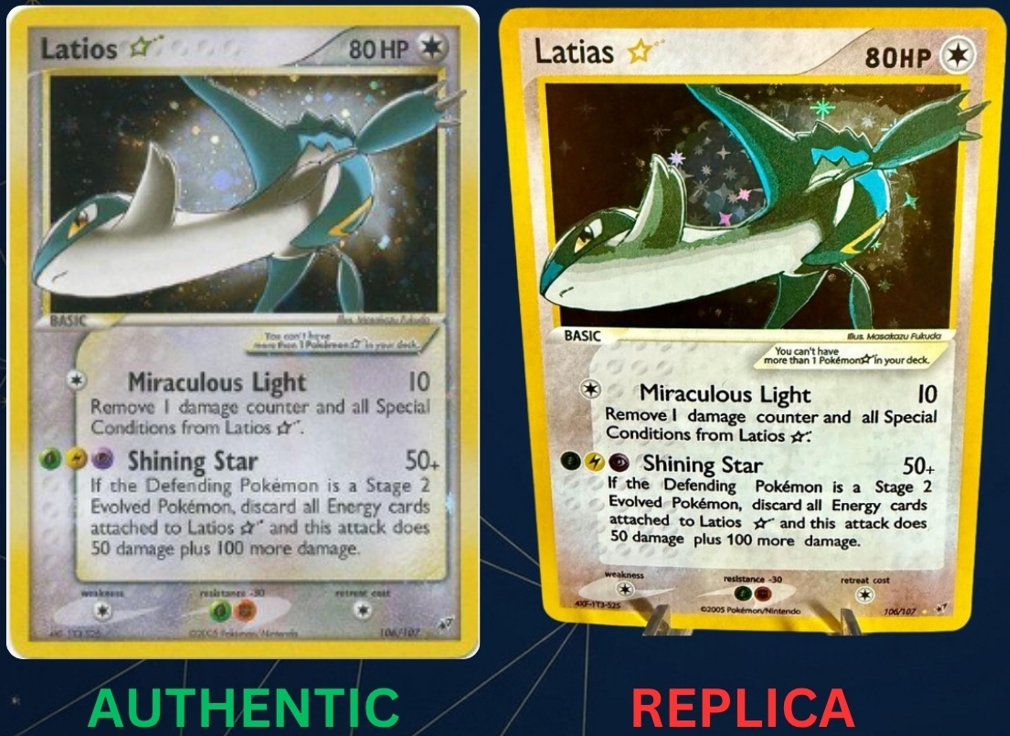
LATIOS ★ EN
The authentic English Latios features a clean color balance, crisp text, and a genuine cosmos holo. In contrast, this replica suffers from a glaring error—the name at the top actually says “Latias” instead of Latios! Aside from the incorrect name, the fake has a harsh yellow border and an unnaturally dark, muddy background. Combined with an artificial, printed-on holo pattern featuring oversized starbursts and noticeably blurry text, this fake is clearly a low-resolution scan.
LATIOS ★ JP
The authentic Japanese Latios features a sleek silver border, clean color balance, crisp text, and a genuine cosmos holo. In contrast, this replica suffers from a muddy, washed-out color palette and an unnaturally dark background. Combined with an artificial, printed-on holo pattern featuring oversized circular starbursts and noticeably blurry text, this fake is clearly a low-resolution scan.
LATIAS ★ EN
The authentic English Latias features a clean color balance, crisp text, and a genuine cosmos holo. In contrast, this replica suffers from an unnaturally harsh yellow border and a muddy, dark background. Combined with an artificial, printed-on holo pattern featuring oversized star shapes and noticeably blurry text, this fake is clearly a low-resolution scan.
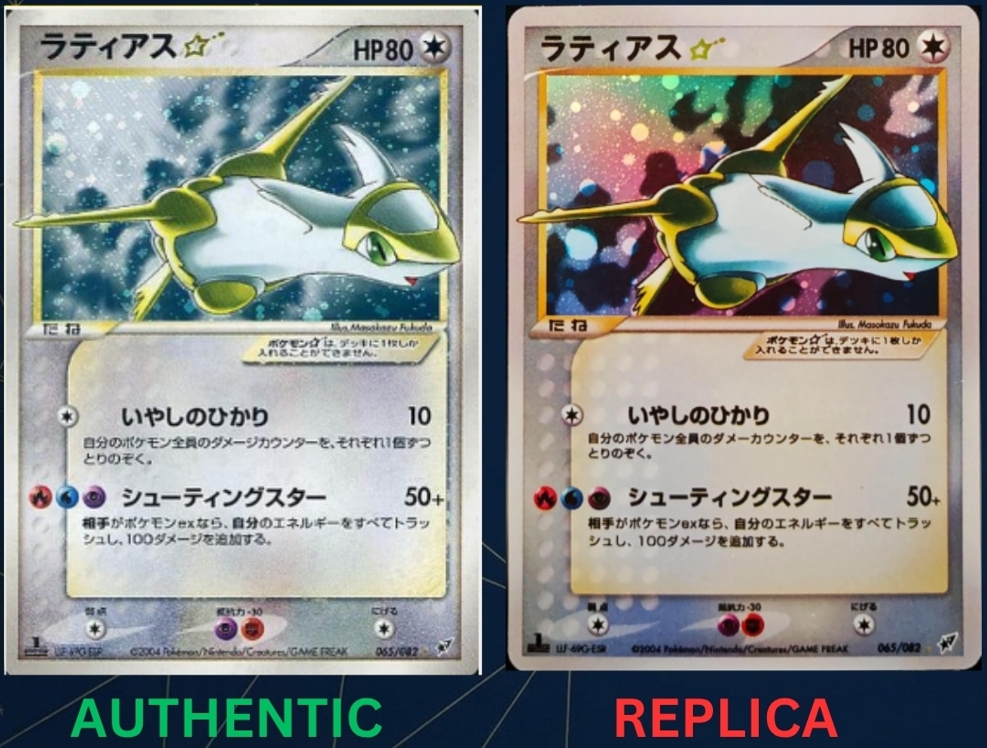
LATIAS ★ JP
The authentic Japanese Latias features a sleek silver border, clean color balance, crisp text, and a genuine cosmos holo. In contrast, this replica suffers from a muddy color palette and an unnaturally dark background. Combined with an artificial, printed-on holo pattern and noticeably blurry text, this fake is clearly a low-resolution scan.
The Counterfeit Evolution
Fakes are getting better. Don’t guess when big money is on the line.
What They Recreate Well
- Basic Card Stock
- General Surface Gloss
- Standard Border Dimensions
Where They Fail
- Exact Elemental Color Tones
- Micro-Text & Edge Clarity
- Deep Factory Holo Consistency
Sometimes the smallest details reveal the biggest problems.
The Vault Workflow:
Verify Before You Buy.
FAQ
1. Why are legendary Gold Star Pokémon cards considered high-risk targets for counterfeiting?
Vintage legendary gold star pokemon cards—specifically the Legendary Beasts (Entei, Raikou, Suicune) and the Eon Duo (Latias, Latios)—are among the most valuable and chased cards in the entire hobby. Because authentic copies command massive price tags, they are prime targets for sophisticated counterfeiters who try to exploit the high market demand by printing advanced replicas to deceive collectors.
2. What are some glaring errors commonly found on fake Latias and Latios Gold Star cards?
High-tier replicas often fail at basic quality control checks, resulting in text and naming errors. For example, some fake English Latios Gold Star cards mistakenly print the name “Latias” at the top of the card instead of “Latios.” Additionally, replicas often suffer from a severe color imbalance, displaying an unnaturally harsh yellow border or a muddy, dark background compared to authentic prints.
3. How can a collector identify a fake Japanese Legendary Beast Gold Star card?
Authentic Japanese Legendary Beast cards feature a clean color balance, crisp text, a sleek silver border, and a genuine cosmos holo pattern. Replicas often give themselves away through massive printing errors. For example, a fake Japanese Entei Gold Star has been spotted with three dark circles instead of the iconic gold star (★) symbol next to the name, along with an aggressively oversaturated red tint and blurry text.
4. When deciding to collect legendary Gold Star Pokémon cards, should I choose English or Japanese prints?
The choice depends on your preference between print quality and market liquidity:
Japanese Prints: Offer superior factory quality due to strict quality control, resulting in razor-sharp text, cleaner holographic clarity, and a lower counterfeit risk.
English Prints: Offer massive global demand and are highly liquid in the market, but they carry an extremely high counterfeit risk and have more variable factory cuts.
5. How can the Validoe app help me verify my vintage Gold Star cards before purchasing?
The Validoe app removes guesswork by connecting you with a 24/7 global team of professional authenticators backed by diagnostic technology. Through The Vault Workflow, you simply snap a photo of your raw cards, slabs, or packs via the app interface and submit it. Within minutes (as little as 10 minutes), you will receive a detailed authenticity report, grading insights, and high-resolution watermarked images.