

Why Gold Star Pokemon Cards Are So Valuable
Gold Star Pokemon cards are among the rarest and most sought-after collectibles in the Pokémon TCG world. Released during the EX era, these cards feature shiny Pokémon with a unique gold star (★) next to their name—making them instantly recognizable and extremely popular among collectors.
But with rarity comes risk.
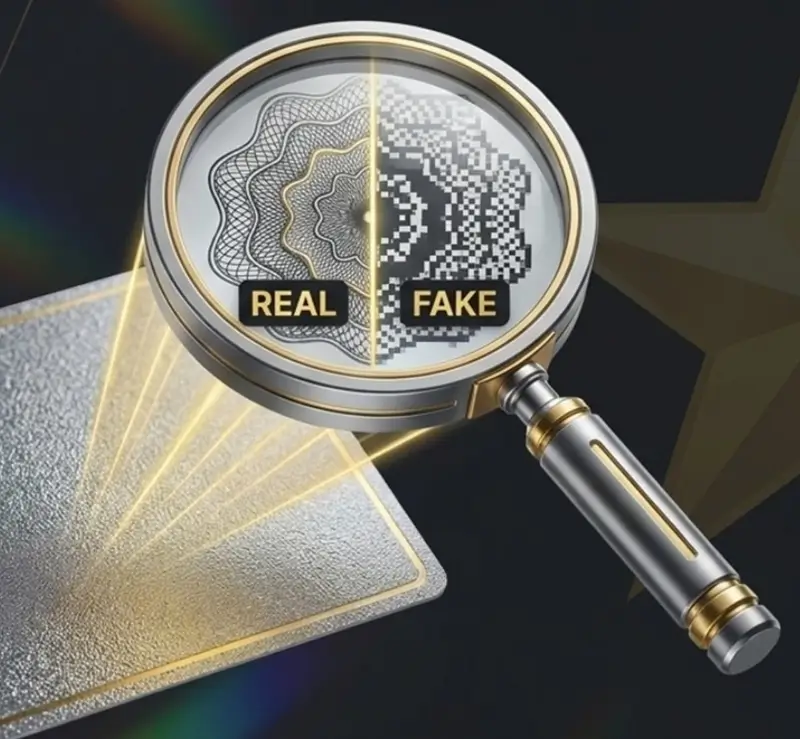
Because Gold Star Pokémon cards are often worth thousands of euros, they are among the most counterfeited cards on the market. Nowadays, fakes are so sophisticated that it can be difficult to distinguish real from fake, especially based on photos alone.
The Ultimate Chase Cards

What Are They? Shiny variant Pokémon featuring a star (★) next to their name.

The Era: Printed exclusively during the vintage EX-era.

The Supply: Shockingly low print quantities, making them the holy grail for collectors.

The Danger: Due to values reaching thousands of dollars, they are the most heavily counterfeited cards on the market today.

How Were They Found?

Packs
- Standard Gold Stars were brutally hard to pull.
- Average odds: ~1 in every 2 Booster Boxes or worse.

Points
- The rarest Japanese versions were never in packs.
- Distributed strictly via the Pokémon Players Club.
- Required actively winning official events over time.
- Example: A massive 70,000 EXP points required to earn Umbreon ★.
The Blueprint: Print Differences
| Feature | English Prints | Japanese Prints |
| Borders | Classic Yellow | Sleek Silver |
| Print Quality | Rougher print consistency, more variance | Sharper resolution, highly consistent |
| Holo Finish | Beautiful, but prone to edge-curl over time | Refined, vibrant, highly durable |
| Card Stock | Standard vintage feel | Stiffer, sturdier, premium feel |
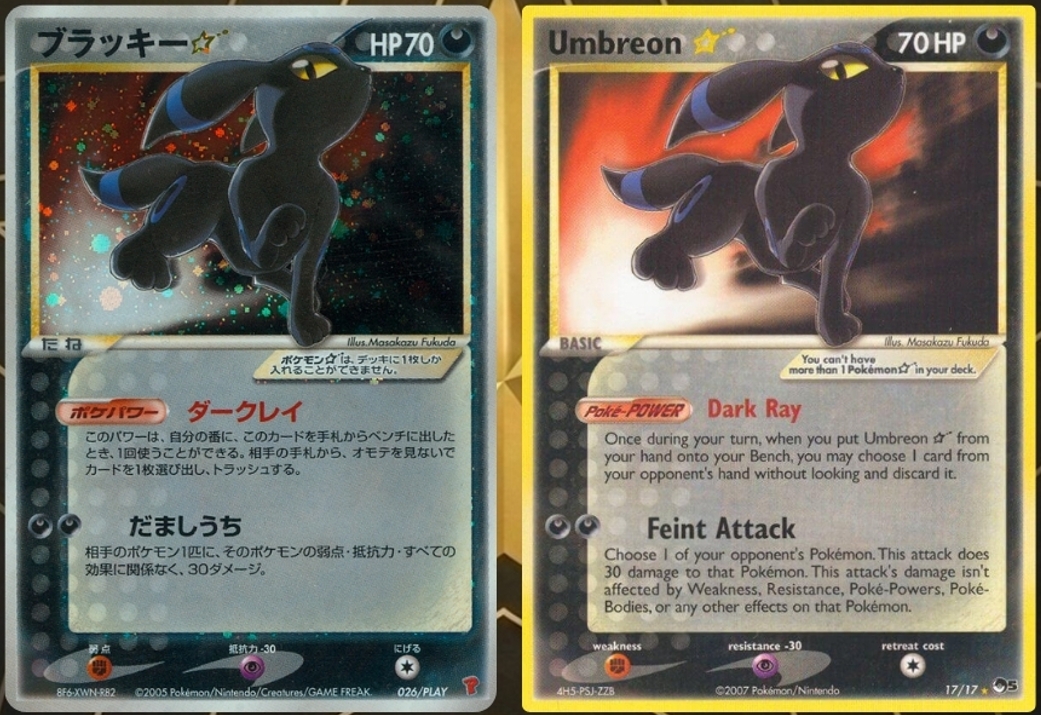
UMBREON ★
Release Specs
English: POP Series 5 (Pulled from limited organized play packs)
Japanese: PLAY PROMO (Earned via 70,000 Players Club Exp)
Key Insights:
- The Japanese PLAY Promo is a holographic masterpiece featuring “glitter” foil and silver borders, awarded only to elite Players Club members who earned 70,000 XP.
- Conversely, the English POP Series 5 version is entirely non-holographic and features the standard thick yellow borders from limited Organized Play packs. Because the English print lacks foil, any copy that shines is a definitive red flag for a counterfeit.
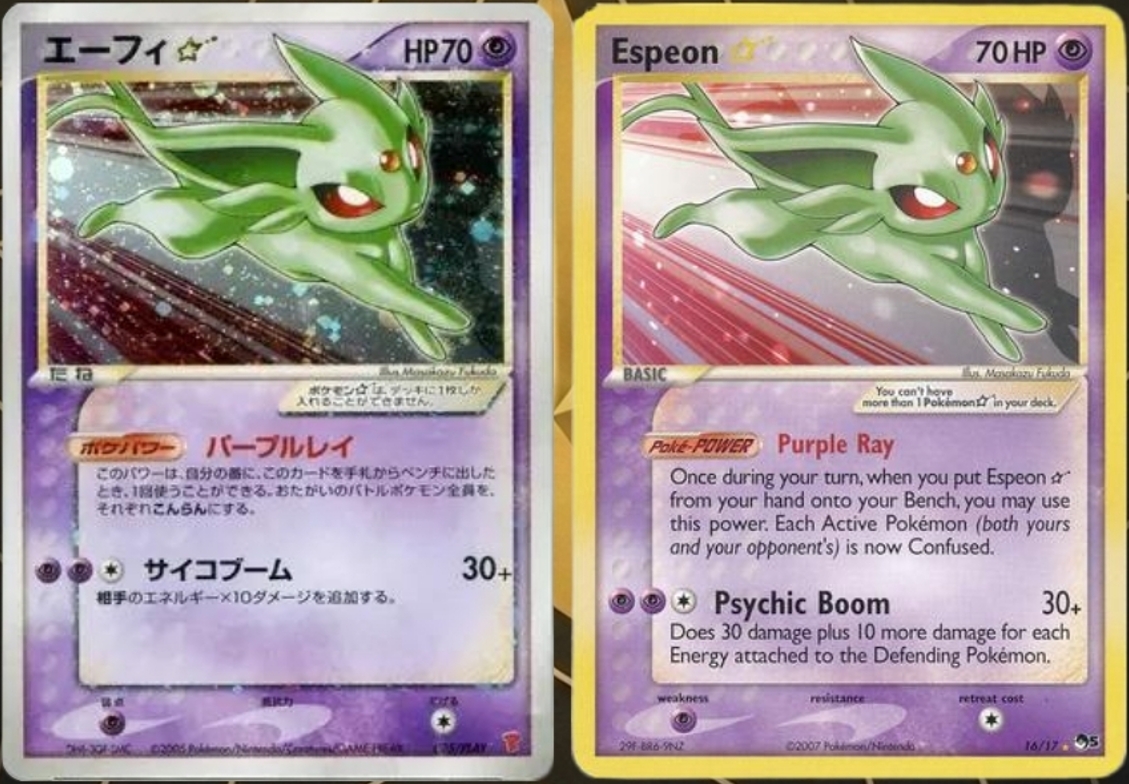
ESPEON ★
Release Specs
English: POP Series 5 (Pulled from limited organized play packs)
Japanese: PLAY PROMO (Earned via 40,000 Players Club Exp)
Key Insights:
- The Japanese PLAY Promo is a holographic trophy card featuring “glitter” foil and silver borders, awarded only to elite Players Club members who earned 40,000 XP.
- Conversely, the English POP Series 5 version is entirely non-holographic and features the standard thick yellow borders from limited Organized Play packs. Because the English print lacks foil, any yellow-bordered copy that shines is a definitive red flag for a counterfeit.
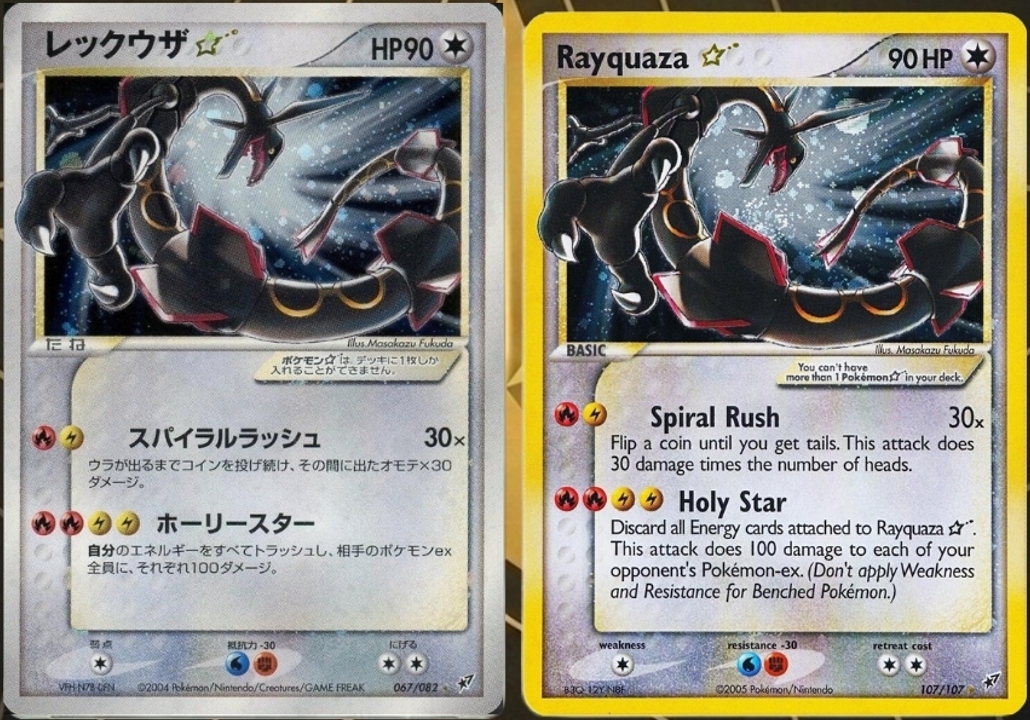
RAYQUAZA ★
Release Specs
English: EX DEOXYS
Japanese: CLASH OF THE BLUE SKY
Key Insights:
- The Japanese print (Clash of the Blue Sky) features a sophisticated silver border and high-gloss finish, typical of premium Japanese sets from the era.
- In contrast, the English print (EX Deoxys) uses the iconic thick yellow borders and a more matte card stock. Unlike the Eeveelutions from POP Series 5, both the Japanese and English Rayquaza Gold Stars are holographic; however, the English version is notoriously difficult to find with clean centering, making high-grade yellow-border copies exceptionally valuable to collectors.
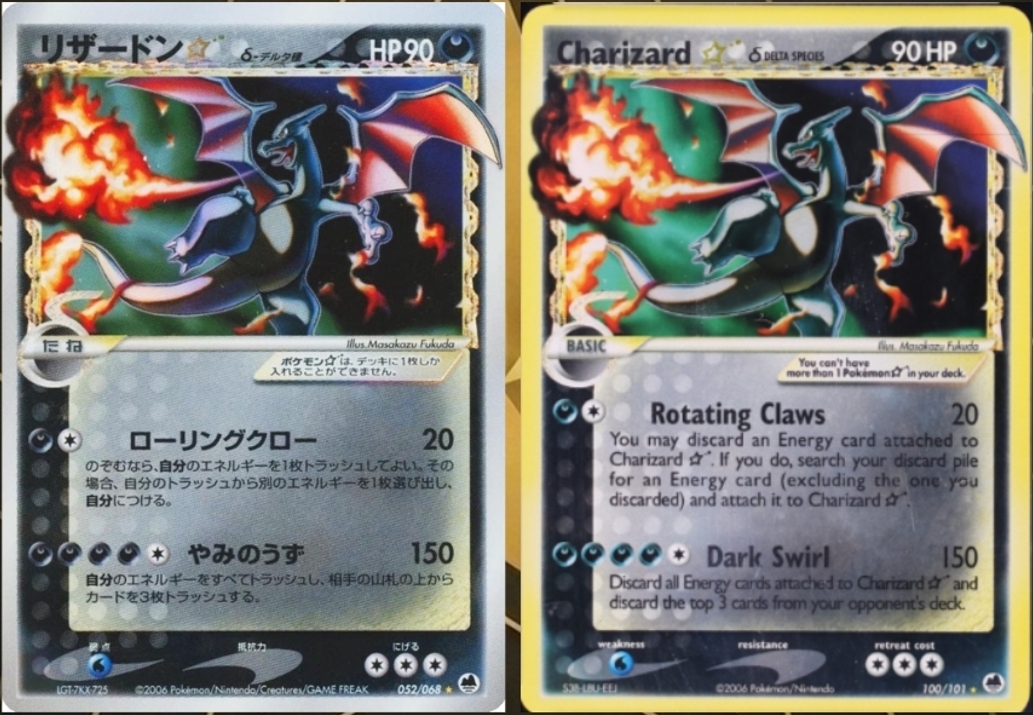
CHARIZARD ★
Release Specs
English: EX DRAGON FRONTIERS
Japanese: OFFENSE AND DEFENSE OF THE FURTHEST ENDS
Key Insights:
- The Japanese print features sleek silver borders and a high-gloss finish that highlights the “Delta Species” artwork.
- Conversely, the English print utilizes standard thick yellow borders and a more matte stock. Due to frequent factory “silvering” and off-center cuts on the English release, finding a perfectly centered copy with clean yellow borders is a major challenge for collectors.
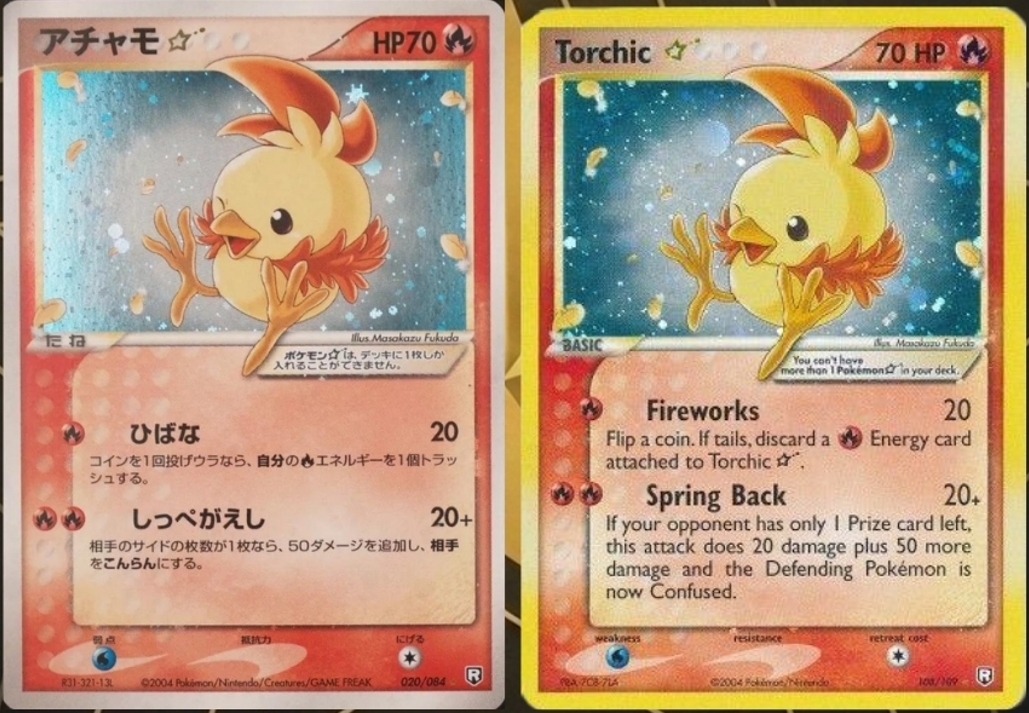
TORCHIC ★
Release Specs
English: EX TEAM ROCKET RETURNS
Japanese: ROCKET GANG STRIKES BACK
Key Insights:
- The Japanese print features refined silver borders and a superior high-gloss finish, while the English print utilizes the standard thick yellow borders and a matte card stock.
- Like other early Gold Stars, the English version often suffers from factory “silvering” on the edges and inconsistent centering, making pristine yellow-border copies rare. Both versions are holographic, but the Japanese card is prized for its cleaner production quality and sharper color saturation.
SOME FAKE GOLD STAR ★ CARDS IN THE MARKET
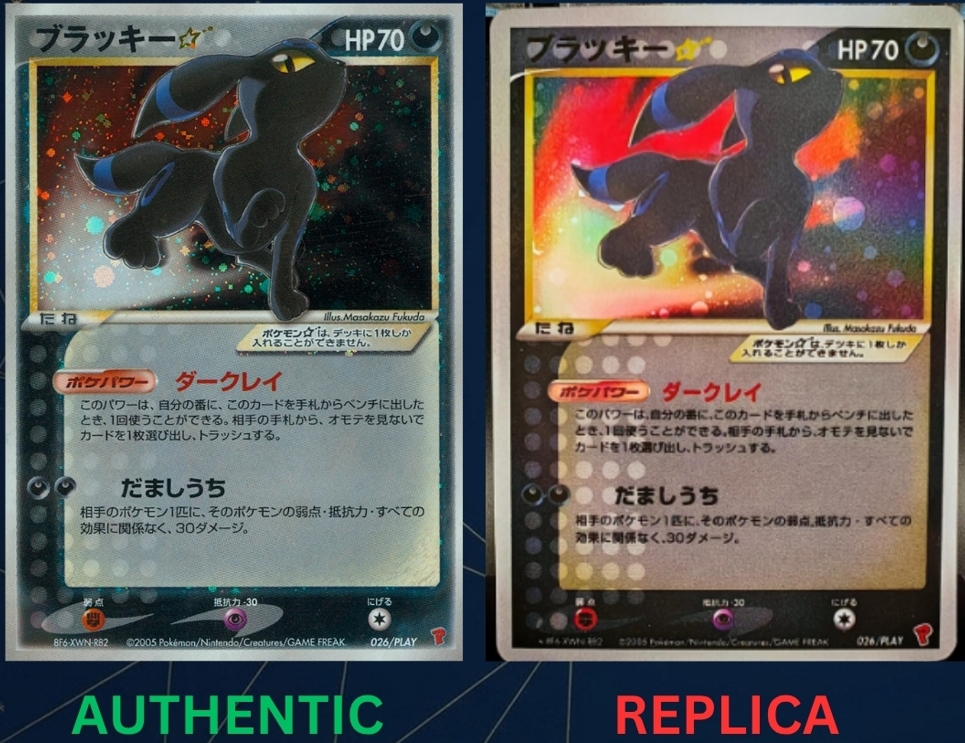
UMBREON ★ (Japanese)
The authentic card features a sharp “glitter” holo with tiny, individual pixels of light and a gold star with a real metallic shine. Its print is crisp, showing deep blacks and razor-sharp text. In contrast, this replica has a cheap vertical rainbow sheen, blurry text from a low-quality scan, and a flat yellow star. You can also see a major color imbalance on the fake, where the background looks way too red and orange compared to the clean, dark tones of the original.
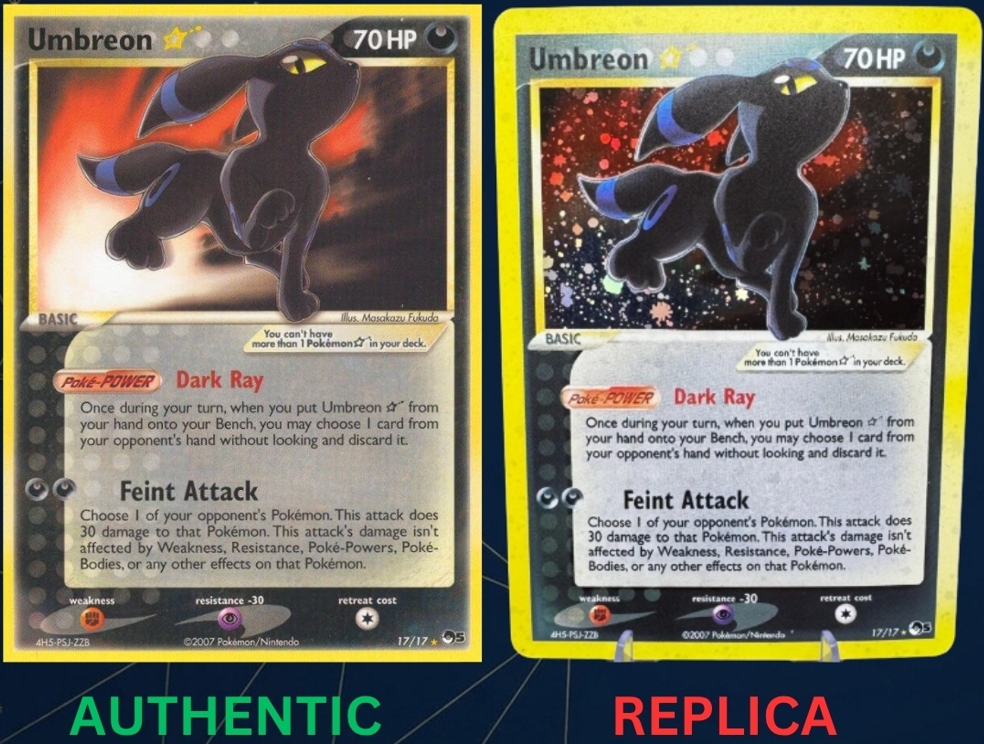
UMBREON ★ (English)
The authentic English Umbreon is entirely non-holographic with a clean, matte finish and sharp text. In contrast, the replica is an obvious fake because it features a flashy “glitter” holo pattern that never existed on the real English card. You can also see a major color imbalance on the fake, with a bright red glow in the art and an oversaturated yellow border that looks far too “loud” compared to the subtle, dark tones of the original.
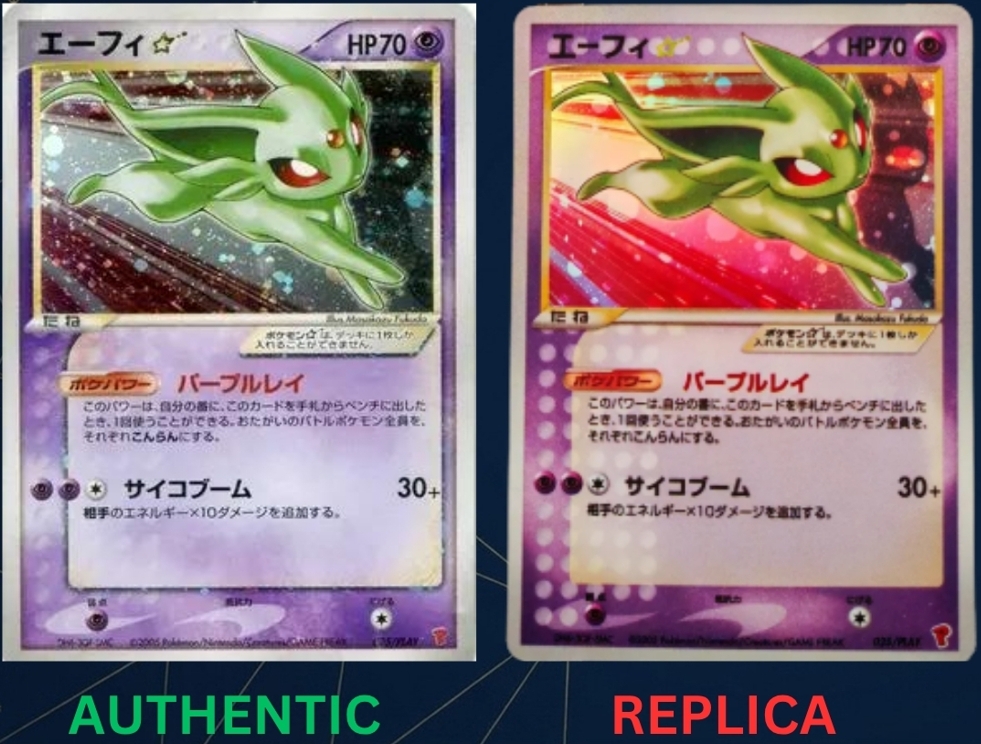
ESPEON ★ (Japanese)
The authentic Espeon features a crisp “glitter” holo with sharp pixels of light and a clean, lavender-purple border. Its print is high-contrast, keeping Espeon’s green coat vibrant and the text razor-sharp. In contrast, this replica has a massive color imbalance, showing a muddy orange tint in the background and a “warm” pinkish border. The holo on the fake looks like a flat rainbow sheen instead of individual sparkles, and the text appears slightly fuzzy from a low-quality scan.
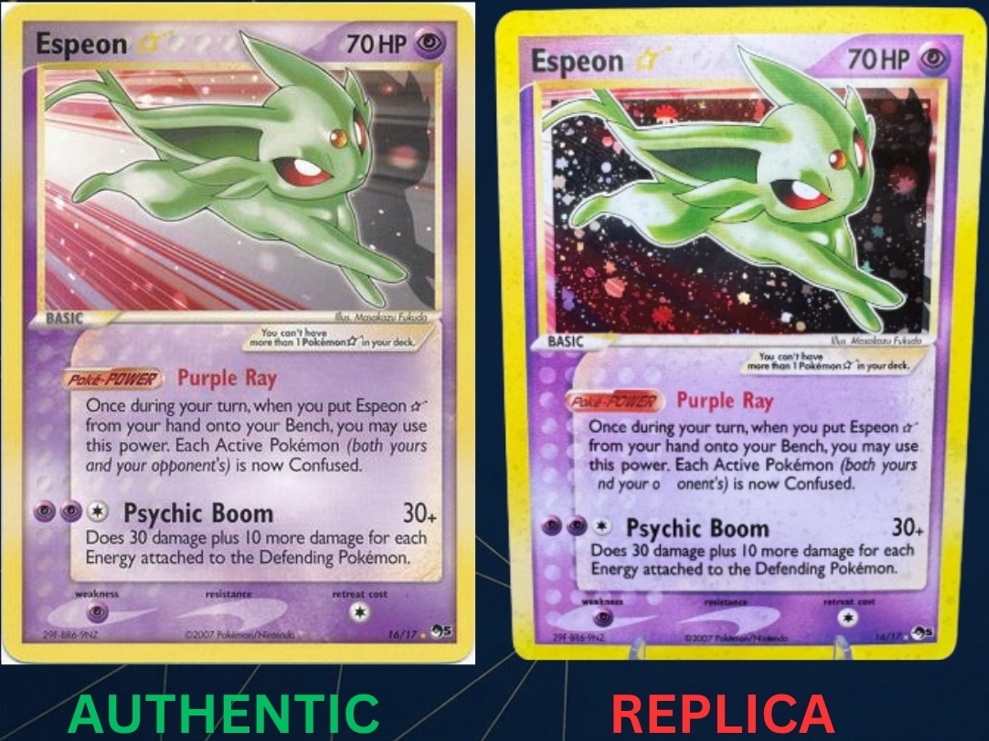
ESPEON ★ (English)
The authentic English Espeon is entirely non-holographic with a clean, matte finish and subtle lavender tones in the background. Its yellow borders are a consistent, natural shade and the text is perfectly sharp. In contrast, this replica is an obvious fake because it features a “glitter” holo pattern that never existed on the real English release. The fake also shows a massive color imbalance, with a dark red background and a “neon” yellow border that looks far too bright compared to the original.
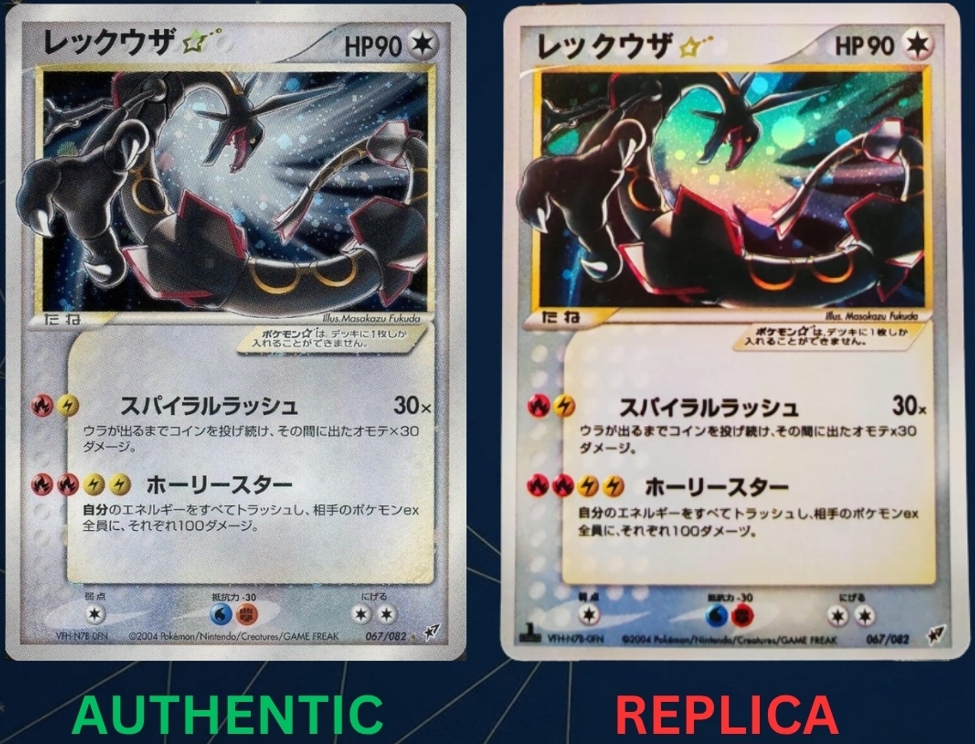
RAYQUAZA ★ (Japanese)
The authentic Japanese Rayquaza features a sleek silver border and a high-quality “glitter” holo with tiny, sharp pixels of light. Its colors are perfectly balanced with deep, dark tones and razor-sharp text. In contrast, this replica has a flat vertical rainbow sheen that washes out the art and a major color imbalance, appearing much too bright and “warm.” You can also see that the fake’s borders is in yellow and text are slightly blurry, a clear sign of a low-resolution scan.
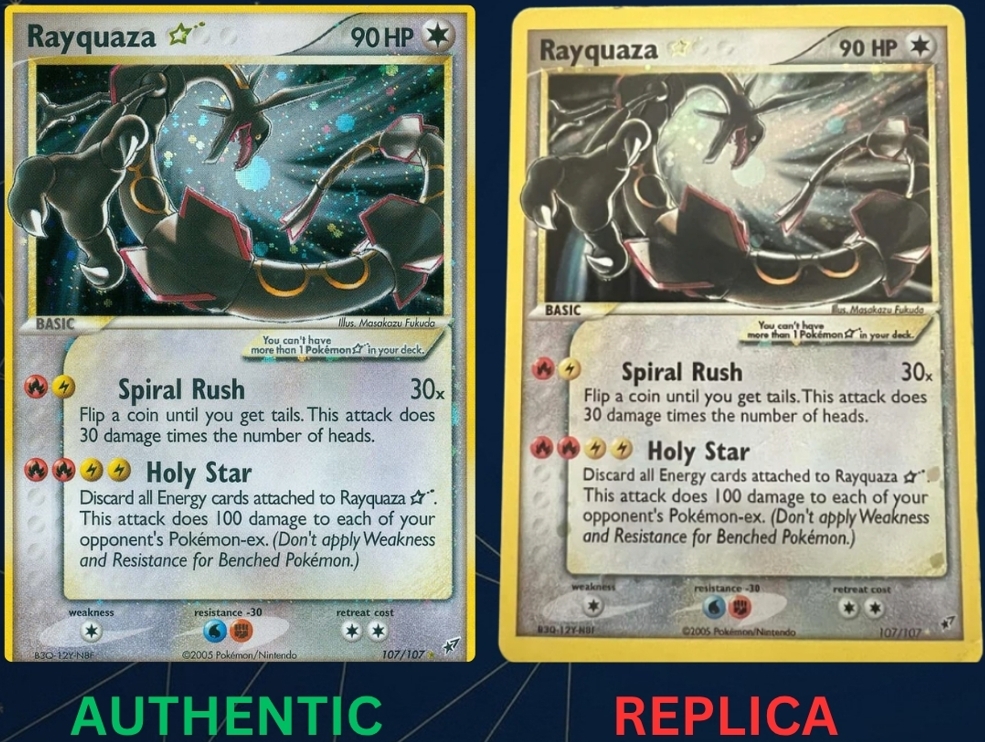
RAYQUAZA ★ (English)
The authentic English Rayquaza features a vibrant “glitter” holo with sharp, individual sparkles scattered across the artwork. The print is crisp, with deep black ink and a gold star next to the name that has a distinct metallic shine. In contrast, this replica is a poor imitation that uses a flat, dull holographic layer that lacks the signature “pop” of the original.
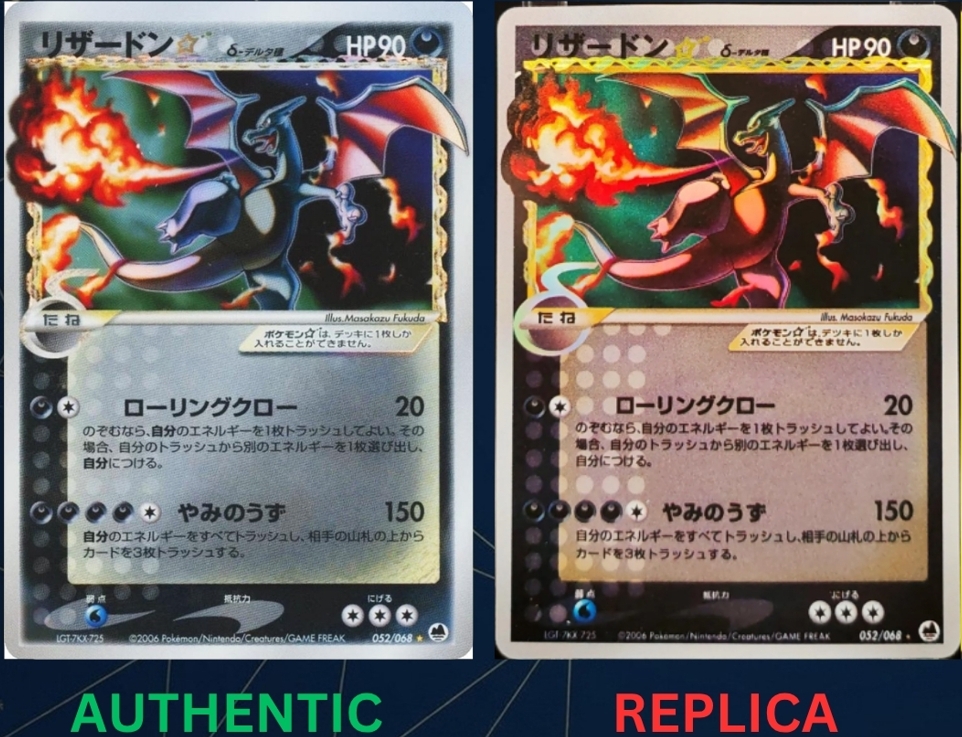
CHARIZARD ★ (Japanese)
The authentic Japanese Charizard features a sleek silver border and a high-quality “glitter” holo with tiny, sharp sparkles. Its colors are deep and balanced, keeping the art intense and the text perfectly crisp. In contrast, this replica has a massive color imbalance, showing an oversaturated “warm” tint that makes the image look too orange. Also the text appears blurry—a clear sign of a low-quality scan.
CHARIZARD ★ (English)
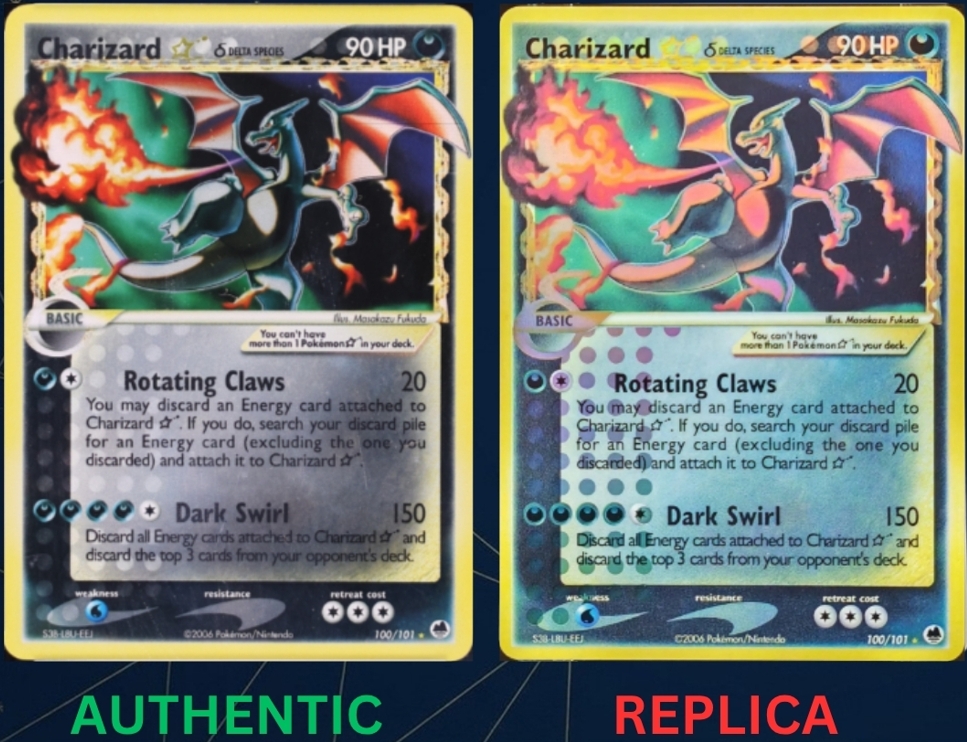
The authentic Charizard features a crisp holo and a deep, dark color palette that makes the art look intense. Its print is razor-sharp with solid black ink and a metallic-shine gold star. In contrast, this replica uses a cheap, “oily” rainbow sheen and shows a massive color imbalance that looks way too bright and oversaturated. The fake also has blurry text and a flat yellow star, clear signs of a low-quality scan.
TORCHIC ★ (Japanese)
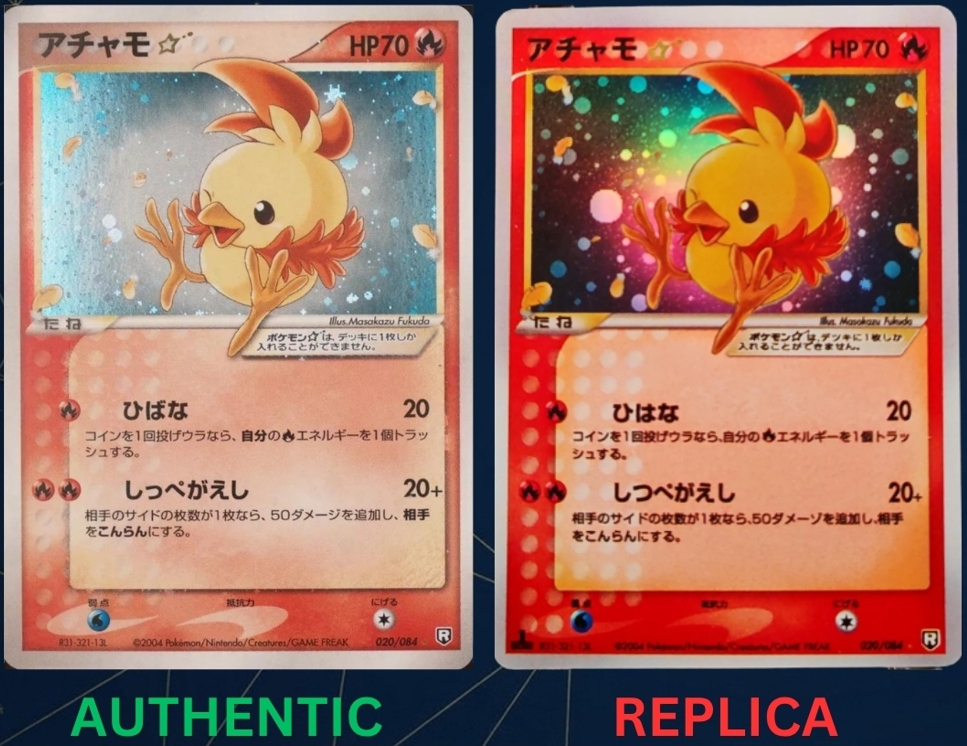
The authentic Japanese Torchic features a sophisticated silver border and a high-quality “glitter” holo with tiny, sharp pixels of light scattered across the art. Its colors are clean and naturally balanced, keeping the text and fine details razor-sharp. In contrast, this replica shows a massive color imbalance, with an oversaturated red glow and an “oily” rainbow sheen instead of clean sparkles. You can also see that the fake’s borders and text are slightly blurry—a common sign that it was produced from a low-resolution scan.
TORCHIC ★ (English)
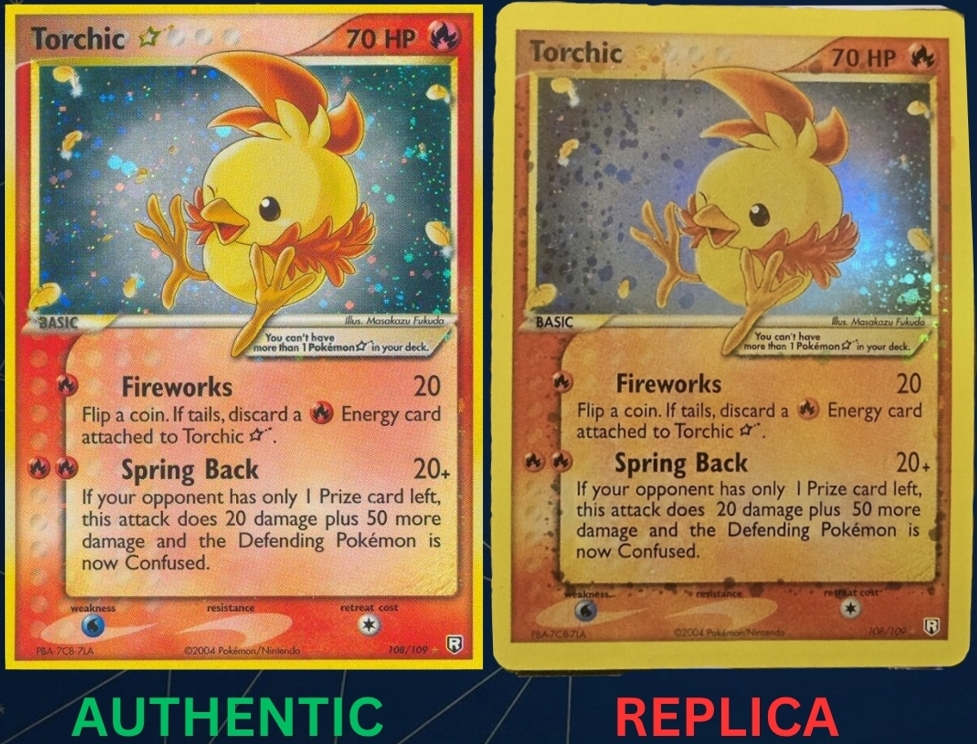
The authentic Torchic has sharp, saturated colors and a unique “glitter” holo—no two real cards share the exact same sparkle placement. In contrast, this replica shows a muddy, yellow-brown color imbalance and blurry text from a low-quality scan. A major giveaway is its static holo pattern, which often matches other fakes perfectly—an impossible trait for a genuine card.
The Counterfeit Epidemic
If a Gold Star deal looks too good to be true—it usually is.
The counterfeit market has evolved past obvious fakes.
Modern scammers expertly replicate weights, specific textures, and precise holo patterns.
The Bottom Line: Relying on a grainy marketplace photo is no longer enough. Small details make or break authenticity.
True Identity. True Potential. One Scan Away. Expert-Backed Authentication & Grading Insight

Authenticity You Can Trust
Expert card specialists supercharged by AI to catch what the naked eye misses.
Grading Insights That Matter
Pre-Grading for raw cards and Re-Grading insights for slabs—know the true potential before you submit.
Complete Confidence
Secure, transparent reports for cards, packs, and sealed boxes.
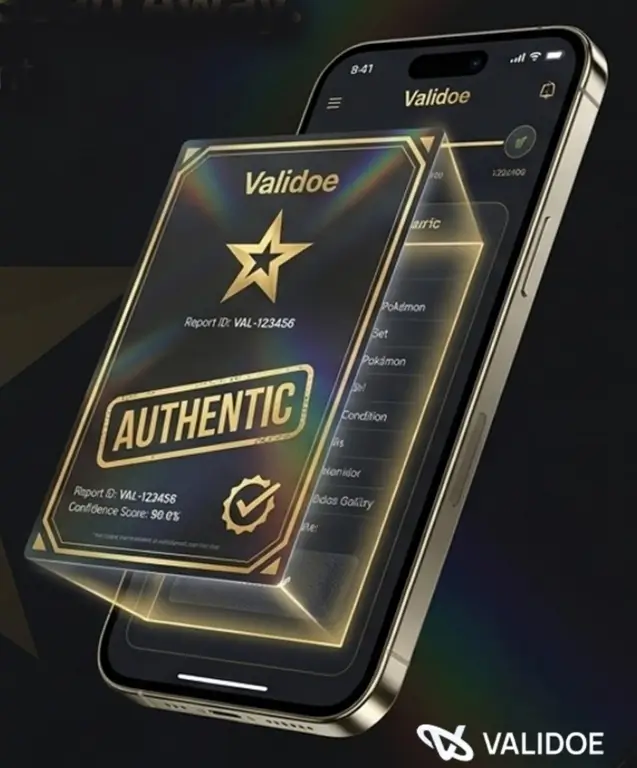
How Validoe Does Its Magic

1: Snap a Photo
Capture details easily using our intuitive, guided app interface.

2: Submit for Verification
Our expert team and cutting-edge AI review authenticity, grade potential, and check for tampering.

3: Receive Results
Get a comprehensive report (Authentic/Replica status, Pre-Grading insights, Watermarked images) in as little as 10 minutes.

FAQ
1. What are Gold Star Pokémon cards?
Gold Star Pokémon cards are ultra-rare collectible cards released during the Pokémon TCG EX-era. They feature shiny versions of Pokémon with a distinctive gold star (★) next to the card name. Due to their limited print runs and unique designs, they are considered some of the most valuable and sought-after Pokémon cards ever made.
2. How much are Gold Star Pokémon cards worth?
The value of Gold Star Pokémon cards can range from a few hundred dollars to tens of thousands, depending on the card, condition, rarity, and grading. Highly desirable cards like Umbreon ★, Espeon ★, and Charizard ★ can command premium prices, especially in PSA 10 or other high-grade conditions.
3. How to get Gold Star Pokémon cards?
Gold Star Pokémon cards can be found through trusted online marketplaces, card shops, auctions, and collector communities. Some were originally pulled from booster packs, while rare Japanese promo versions were only awarded through the Pokémon Players Club. Because counterfeits are common, always verify authenticity before purchasing.
4. How can you tell if a Gold Star Pokémon card is fake?
Common signs of fake Gold Star Pokémon cards include blurry text, incorrect holographic patterns, unusual color tones, poor print quality, and flat-looking gold stars. Authentic cards typically have sharp details, balanced colors, and unique holo effects. Comparing known authentic examples or using professional authentication services can help confirm legitimacy.
5. What is the difference between English and Japanese Gold Star Pokémon cards?
The biggest differences are the borders, print quality, and distribution methods. English Gold Star Pokémon cards typically have classic yellow borders and more print variation, while Japanese versions often feature sleek silver borders, sharper print quality, and more refined holographic finishes. Some Japanese Gold Star cards were also exclusive promotional rewards, making them even rarer.
Don’t Risk Thousands on a Fake. Verify It First.
Empower your collection with expert-backed validation and AI-driven precision. Lead the future of card verification.