


✨ Celebrating 30 Years of Pokémon: Validoe’s Founder provides expert insights for USA Today Anniversary Special.
SEE THE FEATURE →
×

Celebrating 30 Years of Pokémon — Featured in USA Today

See The Feature

Pokémon TCG 30th Celebration Fake Card Guide: Part 4 – Classic Collection Legends Return

Pokémon 30th Celebration Fake Card Guide Part 4

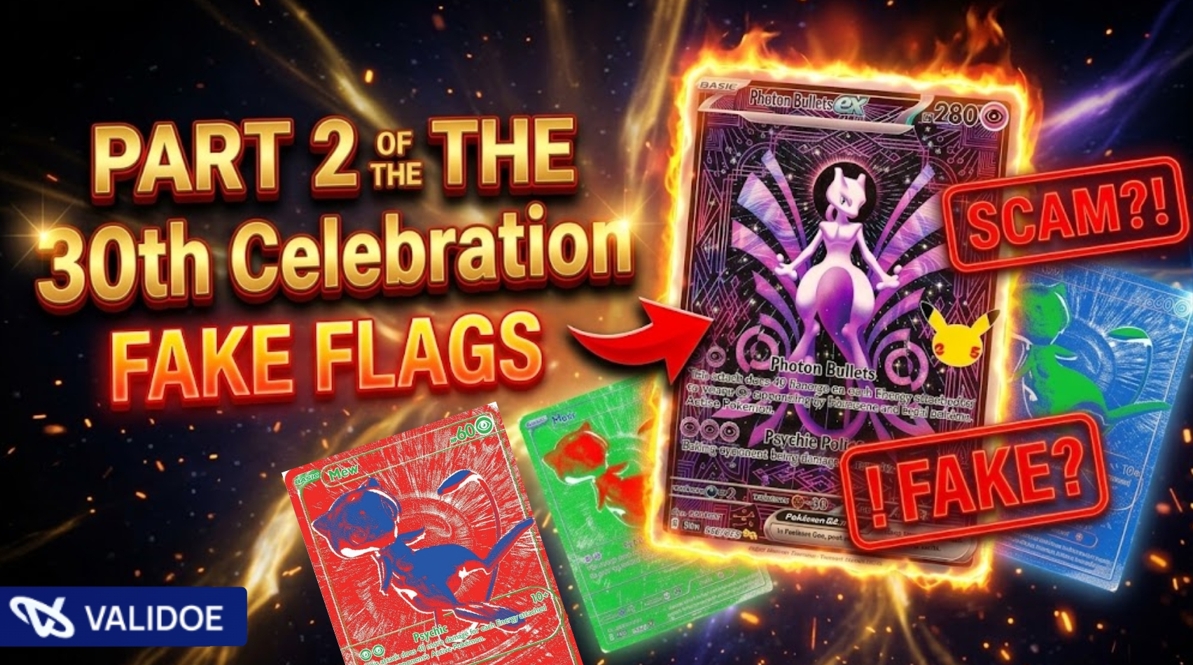
Pokémon TCG 30th Celebration Fake Flag Guide

Part 4: Classic Collection Legends Return

As the Pokémon Trading Card Game reaches its monumental milestone, the 30th Celebration Classic Collection has reintroduced thirty of the most legendary designs in special anniversary releases. While these reprints bridge decades of nostalgia with massive collector value, they have also become prime targets for sophisticated counterfeiters.

Unlike original vintage prints or standard modern expansions, authentic Classic Collection cards feature unique commemorative markings, updated foil treatments, and modern card stock characteristics. In Part 4 of our Fake Flag Guide, we examine four iconic legends spanning four distinct eras—Base Set Charizard #4, TAG TEAM Pikachu & Zekrom-GX #33, Illustration Rare Magikarp #203, and e-Card Lugia #149—breaking down the exact visual giveaways that separate genuine anniversary reprints from high-end fakes.

TCG card

The Celebration of a Generation

The TCG has evolved dramatically from the original Base Set to modern Illustration Rares. The Classic Collection brings back 30 iconic designs in special anniversary releases.

Nostalgia meets massive value. These aren’t just original vintage cards—they are anniversary reprints. Authenticating them requires entirely new, specialized knowledge.

Classic Collection vs. Original Cards: Know the Difference

Golden magnifying glass icon with glowing light rays in the background

Original Releases

Authentic, but features legacy copyright dates, original set symbols, and older foil printing technology.

Pokémon TCG 30th Celebration Anniversary Golden Logo Icon

30th Celebration Reprints

A genuine Classic Collection card is not the exact same printing as its original release. It features commemorative markings, updated foil treatments, and modern printing characteristics.

When authenticating, ALWAYS use a verified example from the 30th Celebration Classic Collection—not an image of the original release. They will not match in every physical detail.

4 Legends. 4 Eras. 1 Target for Counterfeiters.

BASE SET CHARIZARD #4

The Card That Started It All

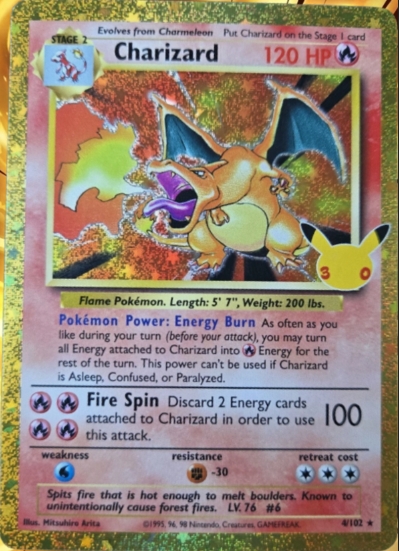
Few Pokémon cards are as recognizable. First released in the early days of the TCG, its return is a major nostalgic moment. But because it is so famous, counterfeiters have decades of reference material to imitate.

BASE SET CHARIZARD #4 real

CHARIZARD #4

CHARIZARD #4 REAL

REAL

CHARIZARD #4 FAKE

FAKE

The Charizard is fake due to its incorrect gold border, unnatural holo effect, and overly saturated coloration that does not match the authentic version.

PIKACHU & ZEKROM-GX #33

The Card That Started It All

PIKACHU & ZEKROM-GX #33

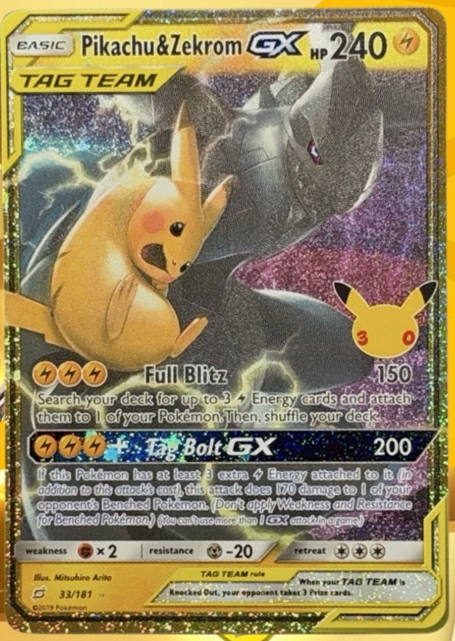
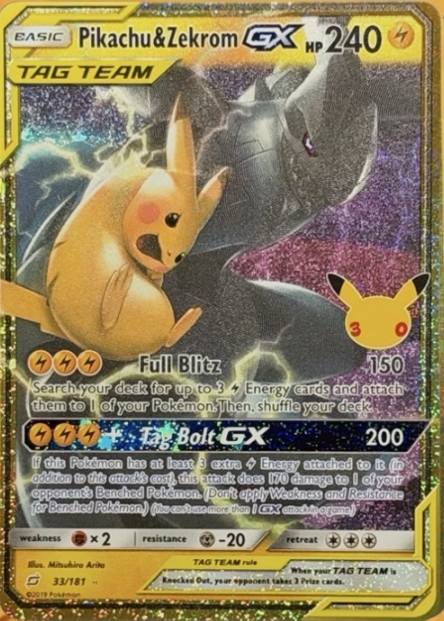
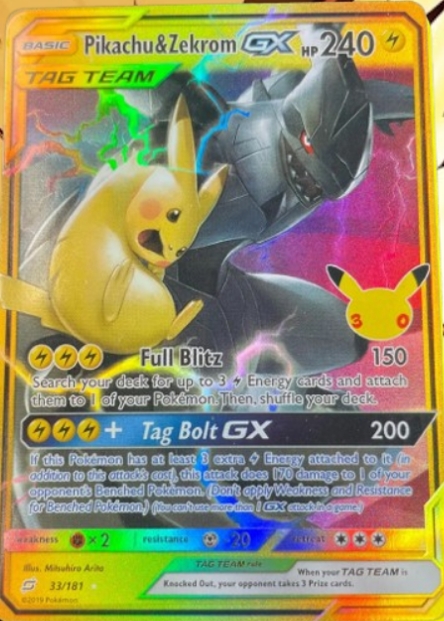
The TAG TEAM era introduced the most memorable partnerships in history. Originally from Sun & Moon, this powerful Electric-type duo remains a highly celebrated design—and a prime target for high-end counterfeits.

PIKACHU & ZEKROM GX #33

PIKACHU & ZEKROM GX #33 REAL
REAL
PIKACHU & ZEKROM GX #33 FAKE
FAKE

The Pikachu & Zekrom GX is fake due to its excessive rainbow holo glare, incorrect gold border coloration, and overly saturated artwork, which differ noticeably from the authentic card.

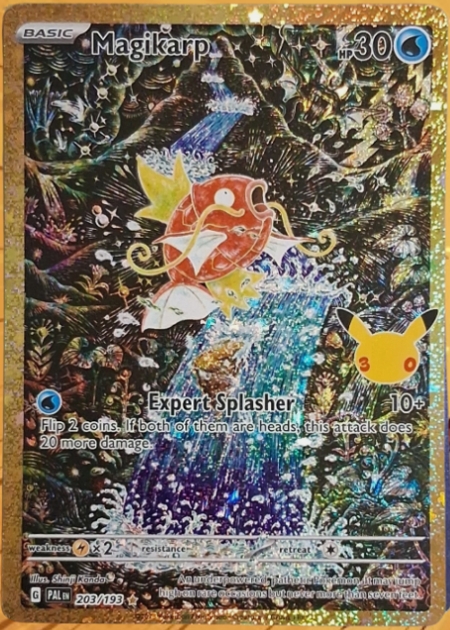
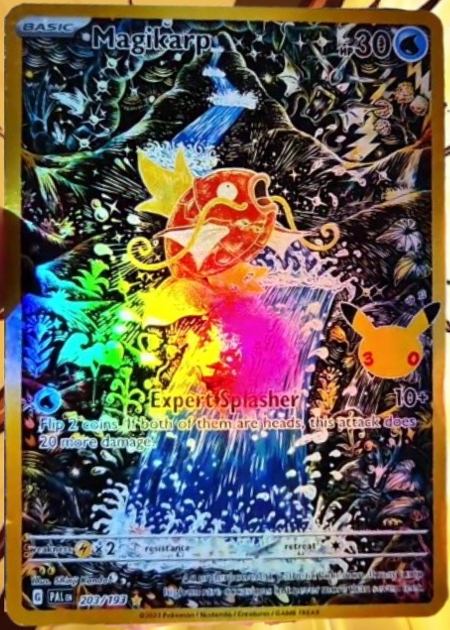
MAGIKARP #203

MAGIKARP #203

From Humble Pokémon to Major Chase

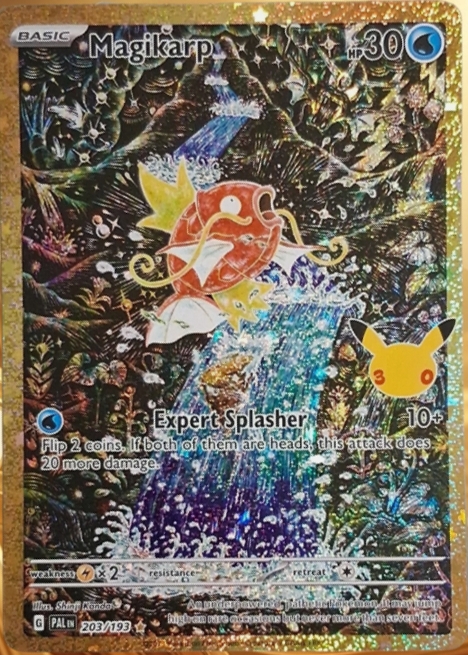
Famous for Splash, this card is anything but ordinary. A highly desirable Illustration Rare from the Scarlet & Violet era, known for its intricate details, flowing movement, and layered colors.

MAGIKARP #203

MAGIKARP #203 REAL
REAL
MAGIKARP #203 FAKE
FAKE

The Magikarp is counterfeit due to its excessive rainbow holo glare, inaccurate coloration, and incorrect border design that lacks the glittery effect found on authentic copies.

LUGIA #149

An Iconic e-Card Era Classic Returns

LUGIA #149

Originally a crown jewel of the 2003 Aquapolis e-Reader expansion, Lugia’s distinctive dot-code border and legendary design make it a towering achievement in the Classic Collection. Authenticating these vintage e-Cards requires verifying dot-code density, card stock, and its legendary holo sheen.

LUGIA #149

LUGIA #149 REAL
REAL
LUGIA #149 FAKE
FAKE

The Lugia #149 is fake due to its incorrect gold border that lacks the authentic glittery texture, overly bright artwork coloration, and unnatural holo effect that differs noticeably from the real card.

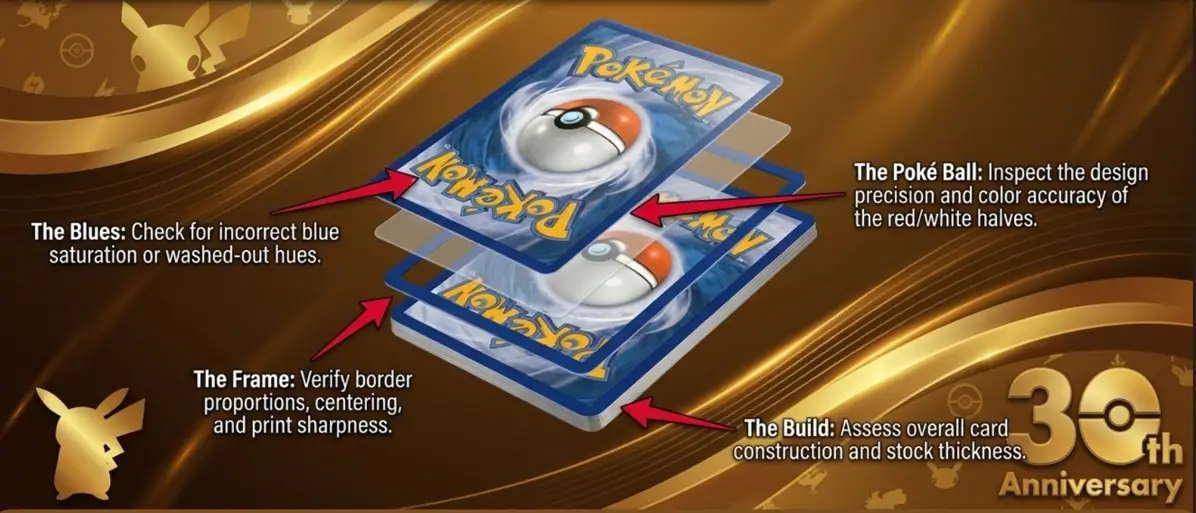
Universal Tactic: Always Check the Back

Even when the front is convincing, the reverse often reveals the truth.

Lighting affects color perception. Never make an authenticity decision based on a single photograph or one suspicious detail.

The Classic Collection Master Checklist

Holofoil:

Pattern & shine match the anniversary printing?

Print Quality:

Artwork, text, and fine details sharp?

Coloration:

Hues consistent with authentic 30th examples?

Typography:

Fonts, spacing, and symbols correct?

Borders:

Colors, proportions, and alignment accurate?

Copyright:

Information matches the correct 30th version?

Card Number:

Comparing against the correct release?

Card Back:

Reverse matches authentic Pokémon printing?

Card Stock:

Construction feels consistent with genuine cards?

Authentication is holistic. One suspicious detail doesn’t mean a card is fake—look for converging evidence across multiple checks.

FAQ

Are Pokémon 30th Celebration Classic Collection cards printed the exact same way as their original vintage releases?

No. A genuine Classic Collection card is an anniversary reprint featuring commemorative anniversary markings, updated foil treatments, and modern printing properties. If a card matches the exact legacy foil technology or copyright characteristics of an original 1990s or 2000s release without anniversary touches, it is a red flag.

Counterfeits of the 30th Celebration Charizard #4 typically feature an incorrect, flat yellow border instead of the authentic glittery texture, an unnatural holographic sheen, and overly saturated artwork colors that do not align with official anniversary prints.

Fake copies of Pikachu & Zekrom-GX #33 often display an excessive, distracting rainbow holo glare across the artwork, incorrect gold border hues, and heavy color saturation that masks the fine details of the original design.

Cards like the 2003 Aquapolis Lugia #149 require specialized checks. Beyond verifying the anniversary stamp and foil sheen, authenticators must inspect dot-code density, card stock thickness, and ensure the border texture does not rely on cheap, flat gold printing.

The Validoe app uses advanced AI card specialists to instantly scan cards, spot sophisticated counterfeits by analyzing micro-details like holo patterns and borders, and help collectors evaluate raw condition or graded slabs with confidence.

validoe card scan

Protect Your 30th Celebration Collection

Celebrating 30 years of Pokémon should be about enjoying the cards you love, not worrying about whether they’re real.

icon image gold search check

Authenticate: Spot sophisticated counterfeits instantly.

icon image gold check

Pre-Grade: Assess raw card condition before submission.

icon image gold 1

Re-Grade: Uncover hidden value in existing slabs.

COLLECT WITH CONFIDENCE.
COLLECT WITH CONFIDENCE POCEMON

validoe.com | The Authority in Pokémon Authentication

Download the Validoe App Today and lead the future of card verification

Facebook
WhatsApp
Twitter
LinkedIn
Pinterest

Related Posts