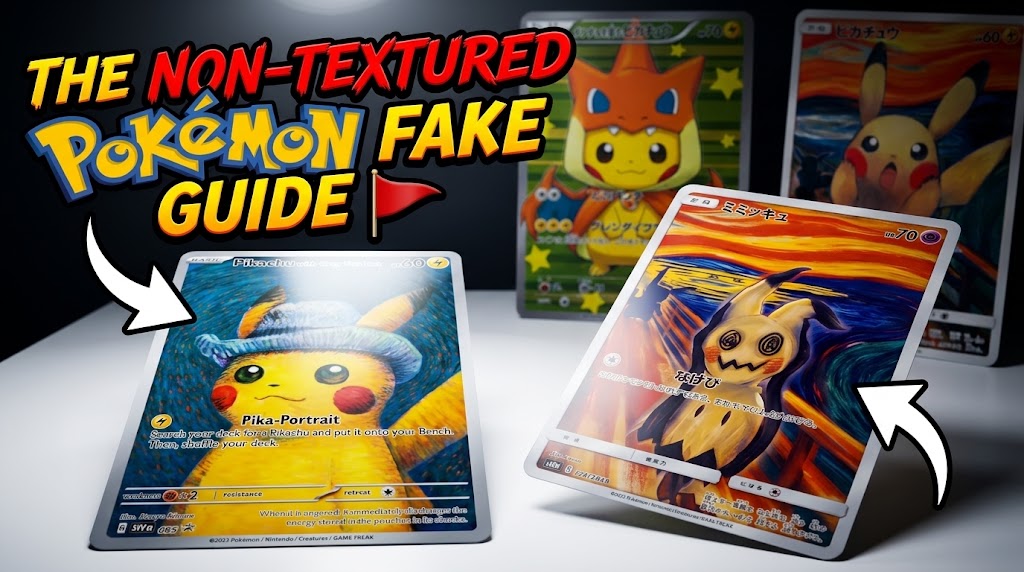
Modern high-value Pokémon cards usually rely on intricate surface embossing as their primary defense against counterfeits. However, some of the most sought-after promo cards—such as the Munch “Scream” Pikachu, Pikachu with Grey Felt Hat, and the Japan Post Stamp Box Pikachu—were manufactured without any raised texture at all.
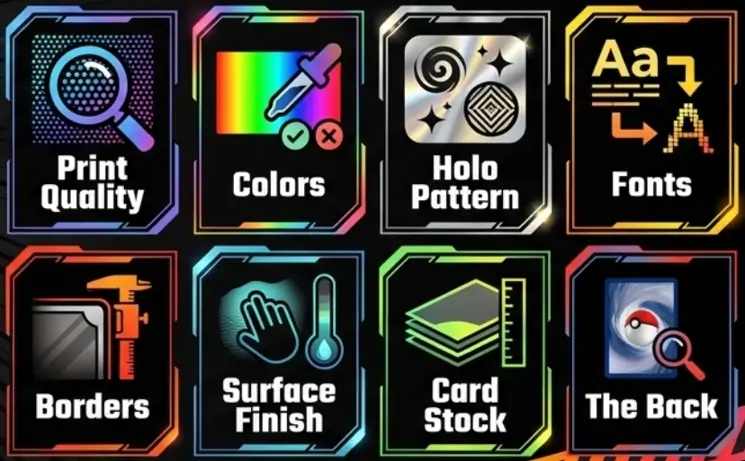
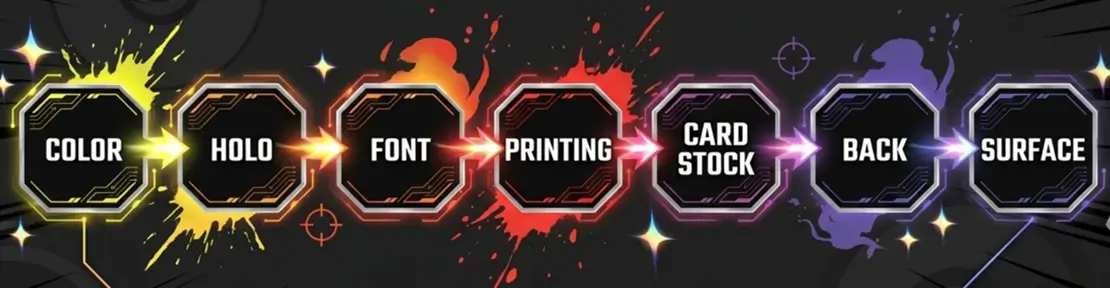
When that key tactile checkpoint is missing, identifying counterfeit cards becomes significantly more challenging. Knowing how to spot fake Pokemon cards without texture requires looking beyond obvious visual flaws and analyzing microscopic manufacturing details like color accuracy, font crispness, and holofoil reflections.
In this authentication guide, we break down the critical fake flags across popular non-textured promos and reveal how to verify your collection with complete confidence.
No Texture? No Problem.
Modern rare cards often have obvious raised texture—but some of the most valuable promos don’t. When that checkpoint disappears, you must look closer at the raw manufacturing details. A convincing counterfeit may get the artwork right while failing the microscopic details.
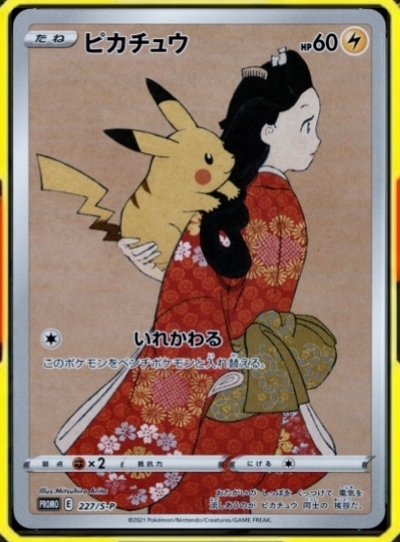
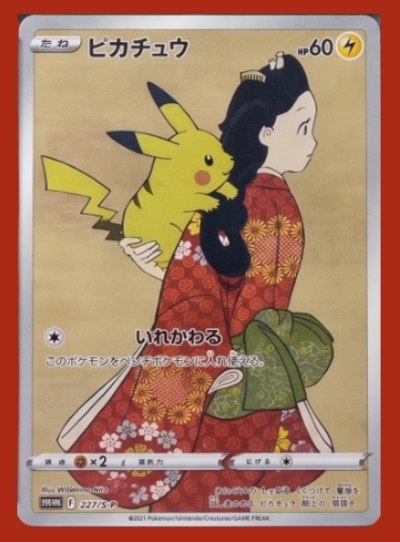
Pikachu 227/S-P
(Japan Post Stamp Box)
AUTHENTIC
REPLICA
When comparing the fake Pikachu 227/S-P to the real card, the biggest differences are in color, the Fighting Energy symbol, and text clarity. The fake is noticeably more colorful and saturated, while the real card has a softer, more balanced tone. The Fighting Energy symbol also differs in shape and definition, while the fake’s text appears less crisp and precise. These subtle print differences can be useful warning signs when authenticating this Pikachu promo.
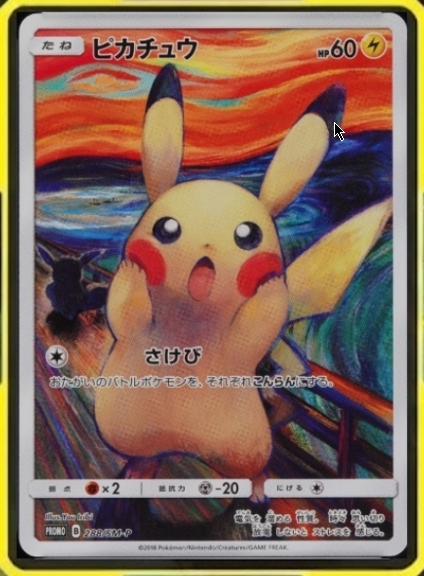
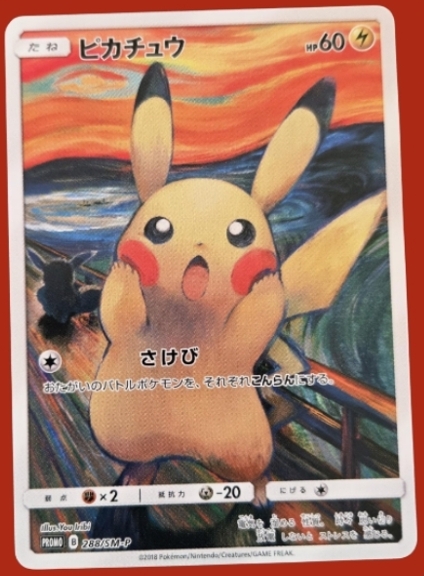
Pikachu #288/SM-P
(Munch A Retrospective)
AUTHENTIC
REPLICA
The replica Munch “Scream” Pikachu is revealed by its poor print quality, washed-out colors, and fuzzy text. The authentic card displays deep, high-contrast tones with vibrant blues and a fiery orange-red sky. Conversely, the replica features desaturated colors, blurry brush strokes, and thick, dull text along the HP and bottom copyright line that lacks sharp edge definition.
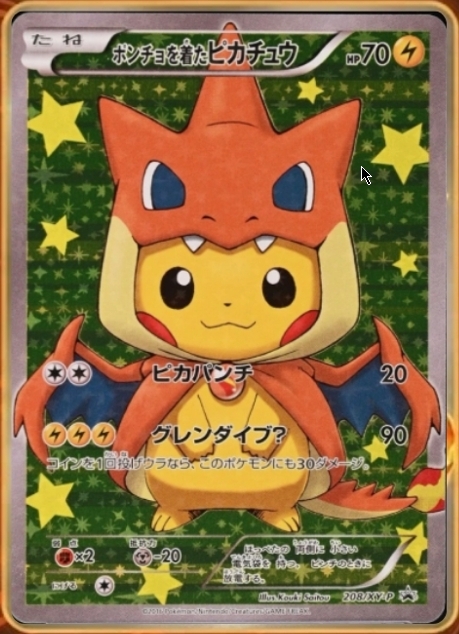
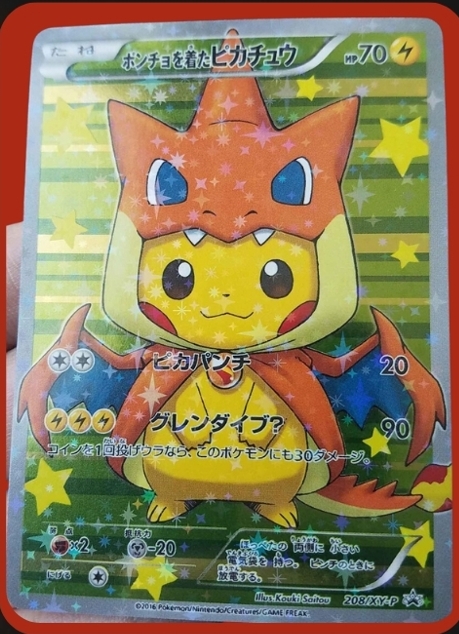
Poncho-Wearing Pikachu Charizard #208/XY-P
AUTHENTIC
REPLICA
The replica Poncho-wearing Pikachu Charizard is exposed by its sparse star pattern and flat, static foil sheen. While the genuine card features a dense, dynamic matrix of sparkling stars that shifts with movement, the fake has noticeably fewer stars scattered across the surface. Additionally, the replica’s underlying foil displays a cheap, motionless glare rather than the rich, multi-dimensional shine of an authentic copy.
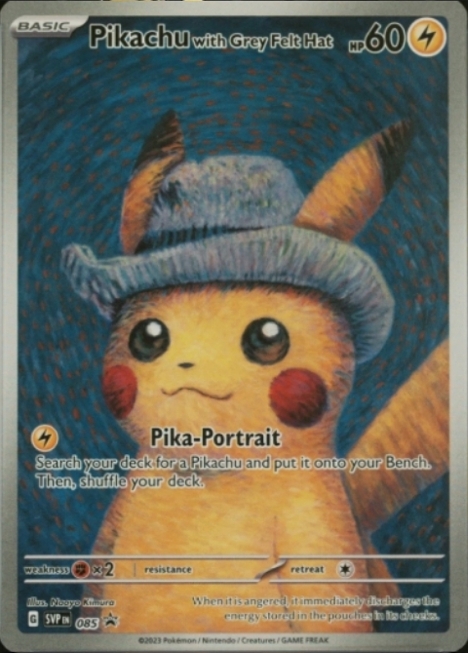
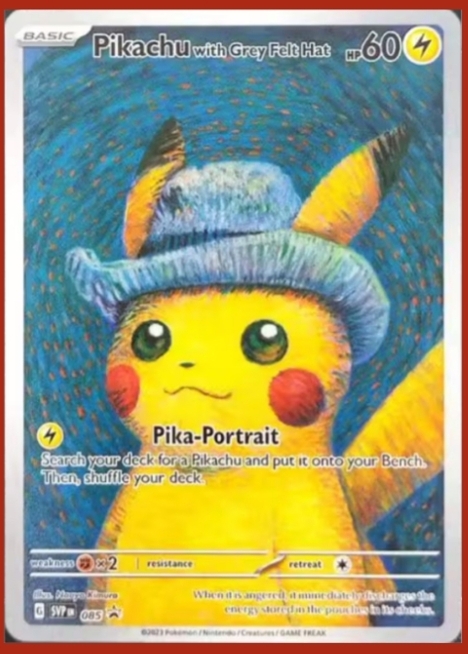
Pikachu with Grey Felt Hat #85
AUTHENTIC
REPLICA
The replica Pikachu with Grey Felt Hat is exposed by its harsh oversaturation and inaccurate colors. The genuine card features warm, moody oil-painting tones, whereas the replica displays neon-yellow fur and bright cyan background strokes. This extreme brightness flattens the artwork’s subtle shading and causes the white attack and copyright text to bleed into the background, losing sharp edge definition.
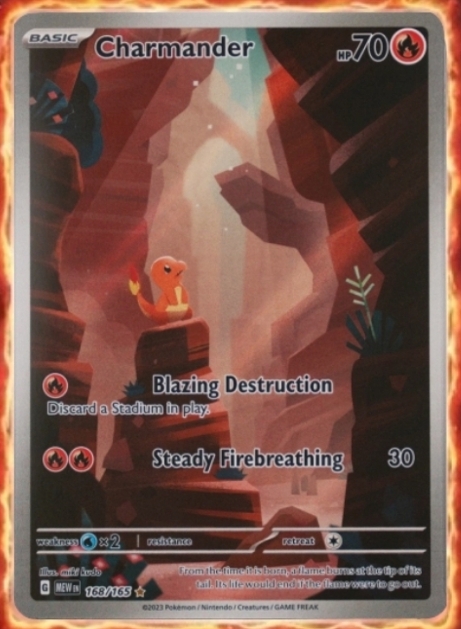
Charmander #168
(Scarlet & Violet 151)
AUTHENTIC
REPLICA
The replica Charmander #168 is exposed by its harsh rainbow foil reflection and severe desaturation. The authentic card displays deep, warm canyon tones with subtle gloss, whereas the counterfeit exhibits a cheap vertical sheen that covers the card in rainbow glare. This intense reflection completely washes out the artwork, turning the dark rock formations pale grey and blurring the card’s text, HP, and bottom set details.
Mimikyu #289/SM-P
(Munch A Retrospective)
AUTHENTIC
REPLICA
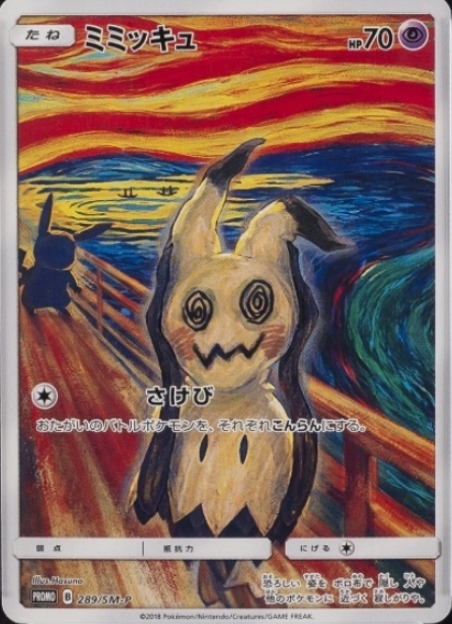
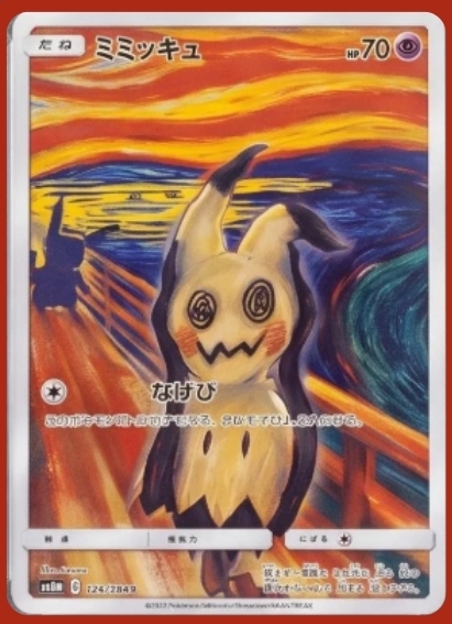
The replica Munch “Scream” Mimikyu is exposed by its desaturated colors, washed-out contrast, and fuzzy text reproduction. The authentic card features deep, vibrant brush strokes in the background, sharp yellow highlights along Mimikyu’s body, and dark, crisp character strokes in both the attack text and bottom set codes. On the counterfeit, the colors appear pale and flat, making it impossible to see the original artwork’s intricate designs and distinct brush strokes.
FAQ
Do all authentic rare Pokémon cards have texture?
No, not all rare or valuable Pokémon cards feature raised texture. While most modern Secret Rares and Full Art cards use textured foil, many high-value promos—such as the Munch Retrospective series, Japan Post Stamp Box promos, and Special Illustration Promos—were printed with smooth, non-textured surface finishes.
How do you check if a non-textured Pokémon card is fake?
To spot a fake non-textured card, you must inspect alternate manufacturing details. Pay close attention to color saturation, print clarity under magnification, energy symbol shapes, font crispness along copyright lines, edge borders, and the holo pattern glare. If even one detail fails, the card is likely a replica.
Do fake Pokémon cards have texture?
Most counterfeit cards lack texture entirely or feature low-quality, incorrect texture patterns. Counterfeiters often struggle to replicate genuine card stock textures, making smooth or improperly textured surfaces a primary warning sign for collectors.
Why are non-textured Japanese promo cards so heavily counterfited?
High-demand Japanese promos (like the Munch Scream set or Poncho-Wearing Pikachus) command premium prices on the market. Because these promos naturally lack surface embossing, counterfeiters find them easier to mimic visually, leading to a high volume of replica cards in circulation.
Can an AI card checker help authenticate non-textured cards?
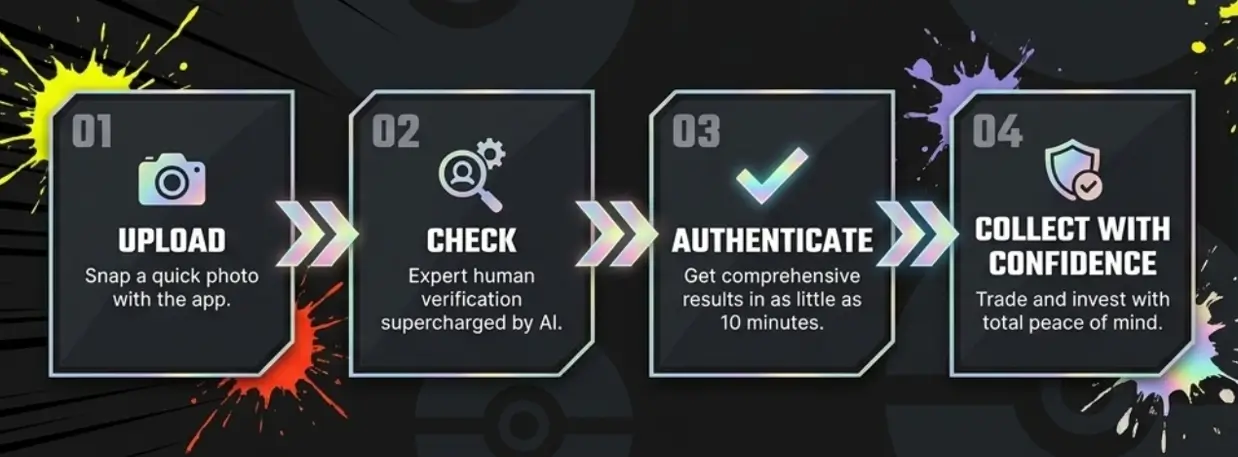
Yes. Platforms like Validoe combine advanced AI image analysis with expert human verification to evaluate microscopic print patterns, font sharpness, and color accuracy in as little as 10 minutes, giving collectors peace of mind when buying or trading smooth promo cards.
PROTECT YOUR COLLECTION
Don’t just trust the card. Verify it with Validoe.